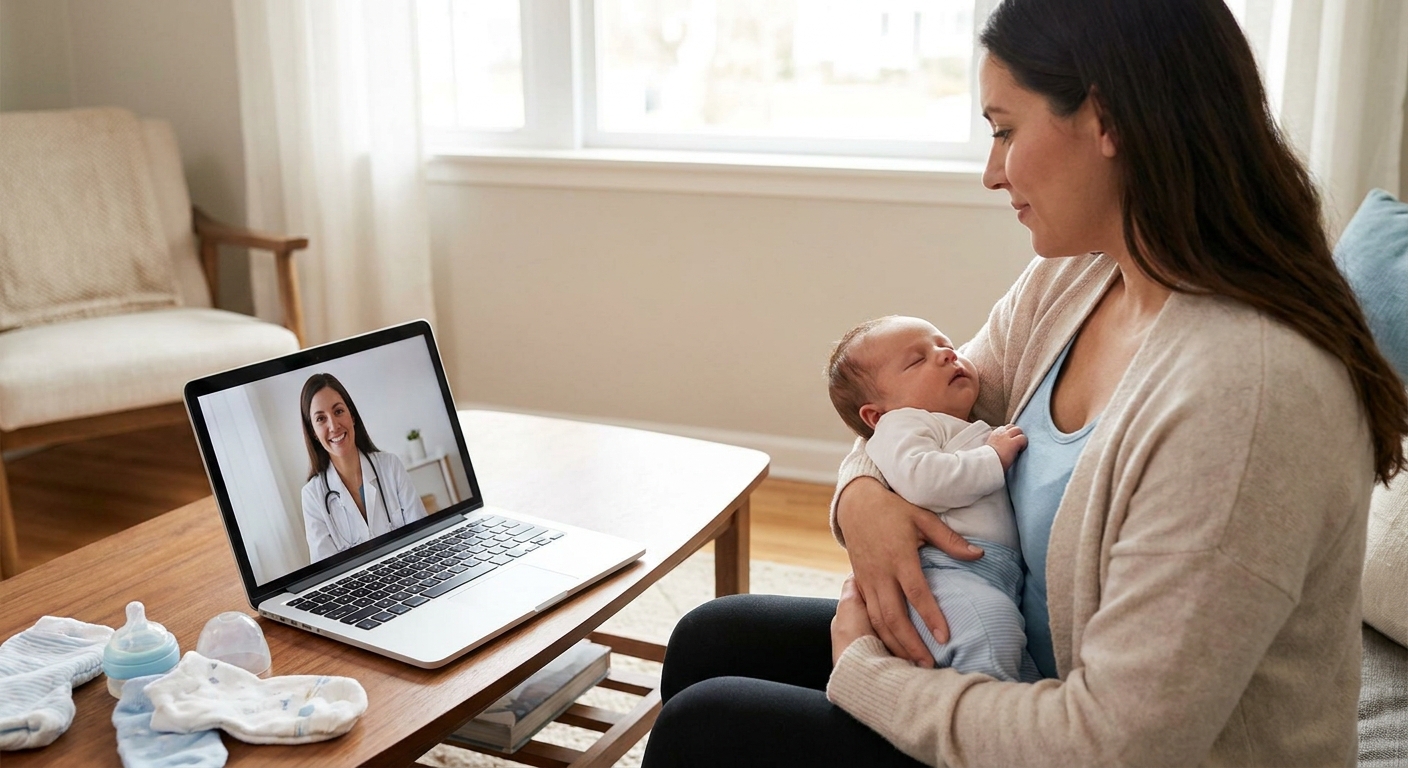
A telehealth postpartum checkup gets a blood pressure recheck, a mood screen, and a lactation question answered before a newborn's next feeding window closes — no car seat, no waiting room, no rescheduling around a nap.
- A telehealth postpartum checkup should cover blood pressure, mood screening, and medication refills inside 12 weeks of birth.
- Best online primary care services for families wins the comprehensive slot for 2026 - Buy.
- Rural parents over 30 minutes from an OB office should default to a rural-access telehealth platform - Buy.
- Skip any platform that can't escalate heavy bleeding or a 160/110 blood pressure reading to same-day in-person care.
Why this matters
Postpartum bleeding, blood pressure spikes, and untreated mood symptoms cause more preventable complications in the first 12 weeks after birth than at almost any other point in reproductive health care. ACOG guidance calls for contact within three weeks of delivery and a full comprehensive visit by 12 weeks, and CDC survey data puts postpartum depression symptoms at roughly 1 in 8 patients — a number that gets missed when screening happens once, at a single overbooked six-week appointment.
Getting to that appointment is the actual barrier in 2026. A parent recovering from a cesarean, running on four hours of broken sleep, isn't loading a car seat for a 20-minute blood pressure check. An online primary care service built for families can run that same check over video, review an incision, and refer out fast when something needs hands-on care — without anyone leaving the nursery.
Cost and insurance verification remain the biggest friction points in 2026, more than platform availability itself. Confirm coverage before the visit, not during it, and treat the checkup as billable the same way an in-person follow-up would be.
Who this is for
This guide is for anyone within 12 weeks of giving birth, vaginal or cesarean, who needs a blood pressure recheck, a mood screen, a lactation consult referral, or a refill on a pregnancy-related medication and can't easily get to a clinic. It covers partners managing a newborn solo while the birthing parent naps, households more than 30 minutes from the nearest OB office, and anyone dealing with postpartum anxiety who doesn't want to explain it to a full waiting room. Every criterion below borrows from NowCare's own telehealth intake standard: licensed clinician review, secure video, documented follow-up.
What to look for in a telehealth postpartum checkup
Same-week scheduling, not same-month
A blood pressure spike or a mood shift that's still present at day 10 needs a same-week slot, not a three-week wait list. Platforms that book same-day or next-day video visits catch preeclampsia symptoms and postpartum depression earlier than ones that route new parents into a general intake queue, and that speed matters more than almost any other feature on this list.
Clinicians who ask about mood, not just stitches
A checkup that only asks about an incision misses the reason roughly 1 in 8 postpartum patients report depression symptoms in CDC survey data. By 2026, most telehealth intake forms should include a mood screen as a default step in the visit, not an optional add-on buried in a checkbox list nobody reads out loud.
A clear escalation path to in-person care
Telehealth is a bridge, not a replacement for an ER visit when bleeding soaks a pad in under an hour or a blood pressure reading tops 160/110. The right platform says so in the first two minutes of the call instead of stalling through a full video visit that should already be a same-day in-person referral.
Coverage for conditions carried over from pregnancy
Gestational diabetes, postpartum thyroiditis, and pregnancy-induced hypertension don't resolve at delivery. A platform built for ongoing prescription management keeps refilling metformin or levothyroxine without forcing a new office referral every six weeks, which matters most for anyone still adjusting a dose in the first postpartum months.
Low-bandwidth access for rural households
Parents more than 30 minutes from an OB clinic need a platform that works over a basic connection, not one that buffers on rural broadband. Telehealth platform for rural patients access matters here — connection quality isn't a nice-to-have when the video visit is the only touchpoint before the 12-week deadline.
Lactation and infant feeding support built in
A postpartum checkup that ignores feeding problems misses one of the most common reasons new parents call for help in the first month. Look for a platform that either handles feeding questions directly or has a documented referral path to a lactation consultant, so a latch problem doesn't sit unresolved for a week waiting on a callback.
Top picks for a telehealth postpartum checkup in 2026
The comprehensive default. An online primary care platform built for families covers blood pressure, mood screening, and a medication refill inside one 20-minute visit — three of the ACOG-recommended checks in a single login. That's the baseline NowCare's own telehealth model points toward: licensed clinicians, secure intake, ongoing support, even though NowCare's own visits are built around foot and ankle care and medically supervised weight loss rather than postpartum OB follow-up. Buy.
The family-fit pick. Households juggling a postpartum checkup, a pediatric follow-up, and a partner's own appointment need a platform matched to family scheduling instead of three separate logins and three separate intake forms. One shared account that books back-to-back visits saves an average parent two extra sign-ups a month, and that adds up over a 12-week recovery window. Buy.
The post-surgical parallel. A cesarean is abdominal surgery, and the same telehealth model used for post-surgery follow-up — incision checks, pain management questions, activity clearance — applies almost exactly to C-section recovery. Consider this if your primary platform doesn't already build in a surgical-recovery track, since a generic intake form won't ask the right questions about a healing incision.
The first-timer's warm-up. Anyone about to book their first postpartum video visit should prepare for a telehealth appointment the way they'd prep for an in-person one: blood pressure cuff nearby, medication list ready, lighting that shows an incision clearly on camera. Consider — it's prep, not a standalone service, but it cuts a 20-minute visit down to 12.
What to avoid
Platforms that skip mood screening by default. If depression and anxiety screening isn't built into the intake form, it won't happen organically in a rushed 15-minute video call. Ask before booking, not after the first visit is already over.
Services that require an office visit just to refill a maintenance medication. Blood pressure and thyroid prescriptions started during pregnancy shouldn't need a new in-person visit every time a refill runs out — that defeats the entire point of telehealth and adds a wait a tired parent doesn't have.
Treating telehealth as the only postpartum prep that matters. Telehealth solves the checkup problem, not the logistics problem. Lining up a newborn clothing starter set before the first pediatric visit follows the same logic as booking postpartum telehealth access before exhaustion sets in — the prep has to happen before it's needed, not during a 3 a.m. feed when research is impossible.
Verdict comparison
| Pick | Best for | Key criterion met | Verdict |
|---|---|---|---|
| Comprehensive primary care telehealth | One visit covering blood pressure, mood, and refills | Same-week scheduling | Buy |
| Family-fit platform | Households booking multiple family visits | Shared scheduling | Buy |
| Post-surgical recovery track | Cesarean recovery follow-up | Incision + activity clearance | Consider |
| First-visit prep guide | Anyone new to telehealth | Visit readiness | Consider |
FAQ
How much does a telehealth postpartum checkup cost in 2026?
Cost varies by platform and insurance coverage, and pricing should be confirmed directly with the provider before booking. Many primary care telehealth platforms bill postpartum visits the same way they'd bill an in-person follow-up.
Is a telehealth postpartum checkup as good as an in-person visit?
For blood pressure checks, mood screening, and medication refills, a telehealth postpartum checkup covers the same ground as an in-person visit. Physical exams like a full incision check or a pelvic exam still need an in-person referral.
When should I schedule my first postpartum telehealth visit?
ACOG guidance recommends contact within three weeks of delivery, with a comprehensive visit by 12 weeks. Scheduling the first video visit in that three-week window catches blood pressure and mood issues earlier.
Can a telehealth visit catch postpartum depression?
Yes, if the intake form includes a mood screen as a default step. CDC survey data shows roughly 1 in 8 postpartum patients report depression symptoms, and a screening question during a routine checkup is often the first time it gets flagged.
Does insurance cover telehealth postpartum checkups?
Most major insurance plans cover telehealth postpartum visits the same way they cover in-person follow-ups, though coverage details vary by plan and should be confirmed before booking.
What if my blood pressure is high after birth?
A reading above 160/110 needs same-day in-person care, not a scheduled video visit. Telehealth works for routine blood pressure rechecks between 3 and 10 days postpartum, but a severe reading is an emergency room visit.
Can rural parents use telehealth for postpartum checkups?
Yes, and it often matters more for rural households than urban ones since the nearest OB office can be 30 minutes or more away. A platform built for low-bandwidth connections keeps the visit from buffering out mid-appointment.
How soon after a C-section can I have a telehealth follow-up?
Most post-surgical telehealth follow-ups happen within the first 1 to 2 weeks for an incision check, then again around the 6-week mark. A platform with a dedicated surgical-recovery track handles both visits without a new referral.
One last thing
The 12-week postpartum window closes faster than most parents expect, and the checkup that gets skipped is almost always the mood screen, not the blood pressure check — cuffs are easy to remember, mood questions get brushed off as "just tired." NowCare's approach to telehealth — licensed clinicians, secure intake, ongoing support — is worth using as the yardstick even outside its own foot-and-ankle and weight-loss specialties: if a postpartum platform can't match that baseline, keep shopping. Book the visit that asks both questions in the same 20 minutes, and treat 2026's telehealth options as the default, not the backup plan.


