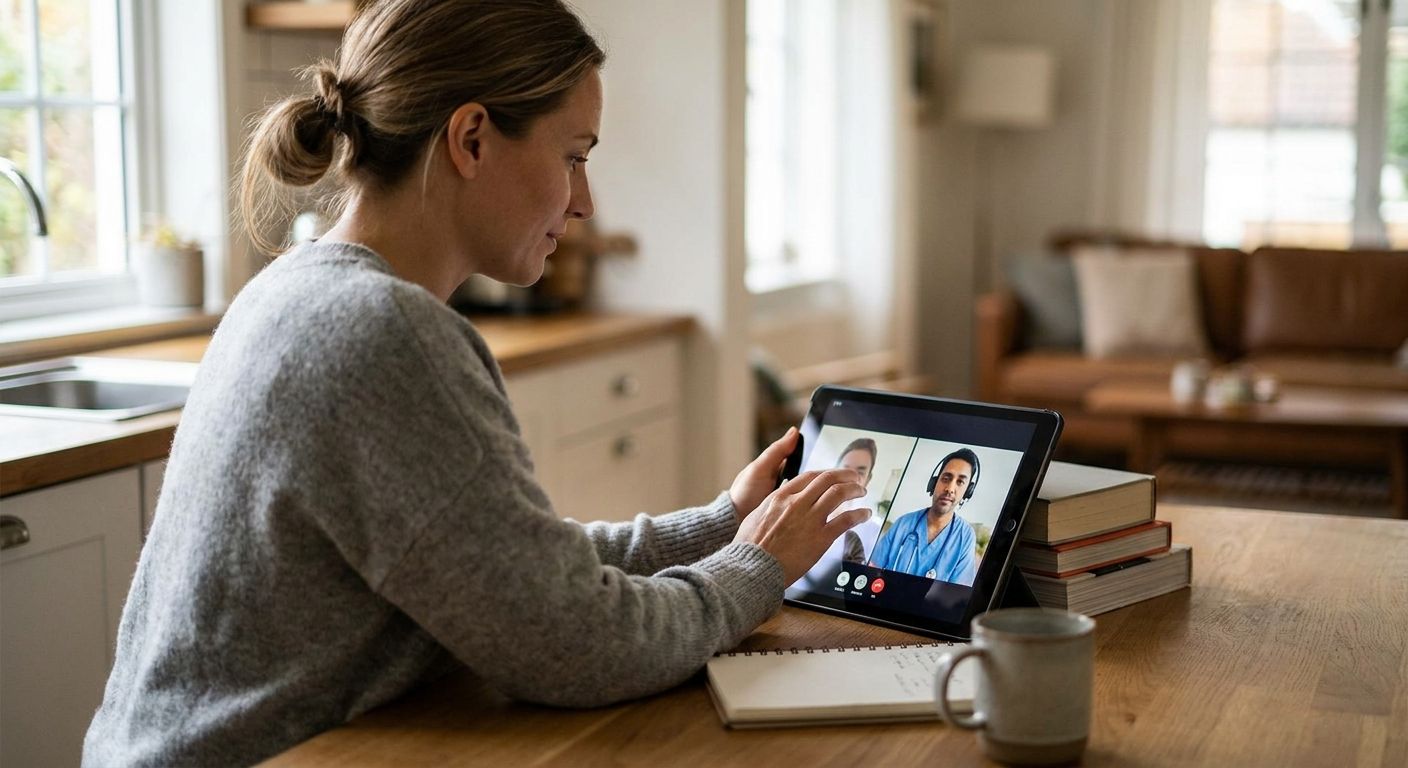
Telehealth for opioid use disorder support means matching two very different needs: medication-assisted treatment (buprenorphine, methadone, naltrexone) and the everyday care — mental health, primary care, follow-up — that keeps recovery on track in 2026.
- Telehealth for opioid use disorder splits into two lanes: medication-assisted treatment and wraparound support like mental health and primary care follow-up.
- NowCare's virtual care model covers the wraparound lane — mental health medication management, behavioral health coordination, primary care — not buprenorphine or methadone prescribing. Consider it for that support, skip it as your OUD medication source.
- Methadone still requires a certified opioid treatment program under 42 CFR Part 8 — no telehealth platform prescribes it directly.
- Since 2023, the federal X-waiver requirement ended, so more licensed prescribers can treat opioid use disorder with buprenorphine.
- Co-occurring anxiety, depression, and insomnia are common in recovery, and telehealth medication management for those conditions is where a platform like NowCare adds real value in 2026.
Why this matters
Opioid use disorder recovery rarely runs on one prescription alone. Someone on buprenorphine still needs sleep support, anxiety management, and a primary care relationship that doesn't disappear after the first visit. Telehealth solved the access problem for a lot of that surrounding care faster than it solved the prescribing problem, since federal rules on controlled substances move slower than video-visit software ever will.
NowCare built its virtual care model around licensed clinicians handling the everyday medical load — mental health medication management, primary care coordination, behavioral health referrals — while leaving controlled-substance induction and OUD-specific prescribing to programs built and licensed for exactly that. Knowing which lane you're in before you book a visit saves a week of back-and-forth.
That's the split this guide walks through: what a real telehealth for opioid use disorder support setup needs, where a virtual care model like NowCare's earns a spot, and where it doesn't.
Who telehealth OUD support is for
This is for someone already prescribed buprenorphine or naltrexone who wants their mental health and primary care handled without extra clinic visits, plus family members or care partners trying to figure out what pieces of recovery telehealth can actually cover in 2026. It is not for someone looking for a same-day buprenorphine prescription with no clinical evaluation — that's not how induction works, on any platform.
What to look for in telehealth for opioid use disorder support
Licensed prescriber credentials, not just a login
Any platform prescribing buprenorphine or naltrexone needs a clinician with an active DEA registration and a license in your state — a clean app interface doesn't substitute for that. Ask directly whether the prescriber is licensed where you live before you book, since cross-state telehealth rules for controlled substances still vary.
Confidentiality protections specific to substance use records
Federal rule 42 CFR Part 2 sets stricter confidentiality standards for substance use disorder treatment records than standard HIPAA does. A telehealth platform handling OUD-adjacent care should be able to explain, in plain language, how it separates those records from a general medical chart.
A real induction and follow-up plan, not a one-time visit
Buprenorphine induction typically runs through a structured first 24 to 72 hours, then regular follow-up to adjust dosing. If a service treats the first prescription as the finish line, look elsewhere.
Coordination with in-person care when it's required
Methadone still has to run through a certified opioid treatment program under 42 CFR Part 8 — no telehealth platform, NowCare included, prescribes it directly. A good OUD-support platform says this upfront instead of dodging the question.
Support for co-occurring conditions
Anxiety, depression, and insomnia show up alongside opioid use disorder often enough that a platform with no mental health medication management pathway is only solving half the problem.
Transparent, insurance-agnostic pricing
Since 2023, more prescribers can treat OUD without the old federal waiver, which means more competition on price. Look for pricing you can see before you book, not a quote that appears after intake.
Where telehealth fits for opioid use disorder recovery support
Mental health medication management — the wraparound most people underestimate. Untreated anxiety or depression alongside opioid use disorder is one of the more common relapse triggers. Best telehealth for mental health medication management connects you with a licensed clinician who manages medication for the conditions riding alongside recovery. One spec that matters: ongoing management means dosage adjustments without a new intake every time. Consider this the mental health leg of your recovery support in 2026.
Behavioral health coordination — the counseling and structure piece. Recovery holds better with regular behavioral health contact, not just a prescription. Telehealth platform for behavioral health practices is built around that kind of ongoing behavioral health relationship. Consider this if your current OUD program doesn't already include counseling access.
Primary care coordination for chronic conditions — the piece that keeps the rest of your health from sliding. OUD recovery often overlaps with other chronic condition management: blood pressure, diabetes, thyroid. Online primary care for chronic condition management keeps that thread going so recovery isn't the only thing getting attention. Consider this if you don't already have a doctor tracking the rest of your health.
Two more pieces worth knowing about, even without a dedicated link here: smoking cessation support often pairs with OUD recovery, since nicotine and opioid dependence show up together more than either alone. General substance use disorder support resources also exist for people managing alcohol alongside opioids — ask whatever platform you use whether it covers either.
Skip any platform, NowCare included, if what you actually need is buprenorphine induction or methadone dosing. That's a job for a dedicated OUD medication program or a certified opioid treatment program, not a general telehealth visit.
Get the wraparound care sorted first
See what a first NowCare telehealth visit covers before you book.
What to avoid
- Same-day buprenorphine with no live evaluation. Federal rules require a clinical evaluation before induction — a platform skipping straight to a prescription is a red flag, not a convenience.
- Vague answers about 42 CFR Part 2. If a platform can't explain how it protects substance use disorder records differently from a routine medical chart, it hasn't built the compliance layer this category needs.
- Any promise to prescribe methadone through telehealth. Methadone dispensing stays inside certified opioid treatment programs under 42 CFR Part 8. That isn't a policy choice any telehealth company gets to make.
Comparison: where each piece of support fits
| Support type | Licensed clinician | Handles controlled substances | Best for | Verdict |
|---|---|---|---|---|
| Mental health medication management | Yes | No | Co-occurring anxiety, depression, insomnia | Consider |
| Behavioral health coordination | Yes | No | Ongoing counseling structure | Consider |
| Primary care coordination | Yes | No | Chronic condition overlap | Consider |
| Dedicated buprenorphine/naltrexone program | Yes | Yes | OUD medication induction and maintenance | Not offered by NowCare |
| Certified opioid treatment program (OTP) | Yes | Yes, methadone | Daily-dosed methadone maintenance | In-person only, per 42 CFR Part 8 |
FAQ
What is telehealth for opioid use disorder treatment support?
Telehealth for opioid use disorder support covers two things: medication-assisted treatment prescribed by a licensed clinician, and wraparound care like mental health medication management and primary care that keeps recovery on track. Most general telehealth platforms in 2026 cover the second piece, not the first.
Can you get Suboxone or buprenorphine prescribed through telehealth?
Yes, through prescribers specifically licensed and registered to treat opioid use disorder, following a clinical evaluation and structured induction. A general telehealth visit for a cold or skin issue is not the same pathway.
Is methadone available through telehealth?
No. Methadone has to be dispensed through a certified opioid treatment program under 42 CFR Part 8, which requires in-person dosing. No telehealth platform prescribes or dispenses it directly.
Does NowCare treat opioid use disorder directly?
NowCare's virtual care model covers mental health medication management, behavioral health coordination, and primary care support, not buprenorphine or methadone prescribing for opioid use disorder. Those pieces still need a program licensed specifically for OUD medication.
What's the difference between buprenorphine, methadone, and naltrexone?
Buprenorphine and methadone are opioid agonists that reduce withdrawal and cravings, while naltrexone is an opioid antagonist that blocks opioid effects entirely. Methadone requires daily in-person dosing at a certified opioid treatment program; buprenorphine and naltrexone have more flexible prescribing paths.
Is telehealth OUD support covered by insurance?
Coverage depends on the specific service and your plan — mental health medication management and primary care visits are commonly covered, while OUD medication programs vary by state and insurer. Check current coverage details before booking either type of visit.
What happened to the X-waiver requirement for buprenorphine prescribers?
The Consolidated Appropriations Act eliminated the federal X-waiver requirement in 2023, letting more licensed prescribers treat opioid use disorder with buprenorphine without a separate waiver. It didn't change methadone rules, which still run through certified opioid treatment programs.
How does telehealth handle co-occurring mental health conditions in OUD recovery?
Telehealth mental health medication management handles anxiety, depression, and insomnia alongside opioid use disorder recovery through licensed clinicians managing medication and follow-up remotely. This is one of the strongest use cases for telehealth in 2026, separate from OUD medication itself.
One last thing
The X-waiver disappearing in 2023 didn't flood the market with telehealth buprenorphine providers the way a lot of people expected. Most primary care doctors still don't prescribe it, waiver or not, because induction and monitoring take real time a 15-minute slot doesn't allow. If your OUD medication is already stable, the highest-value telehealth move in 2026 is usually filling the mental health and primary care gaps around it, not shopping for a new prescriber.


