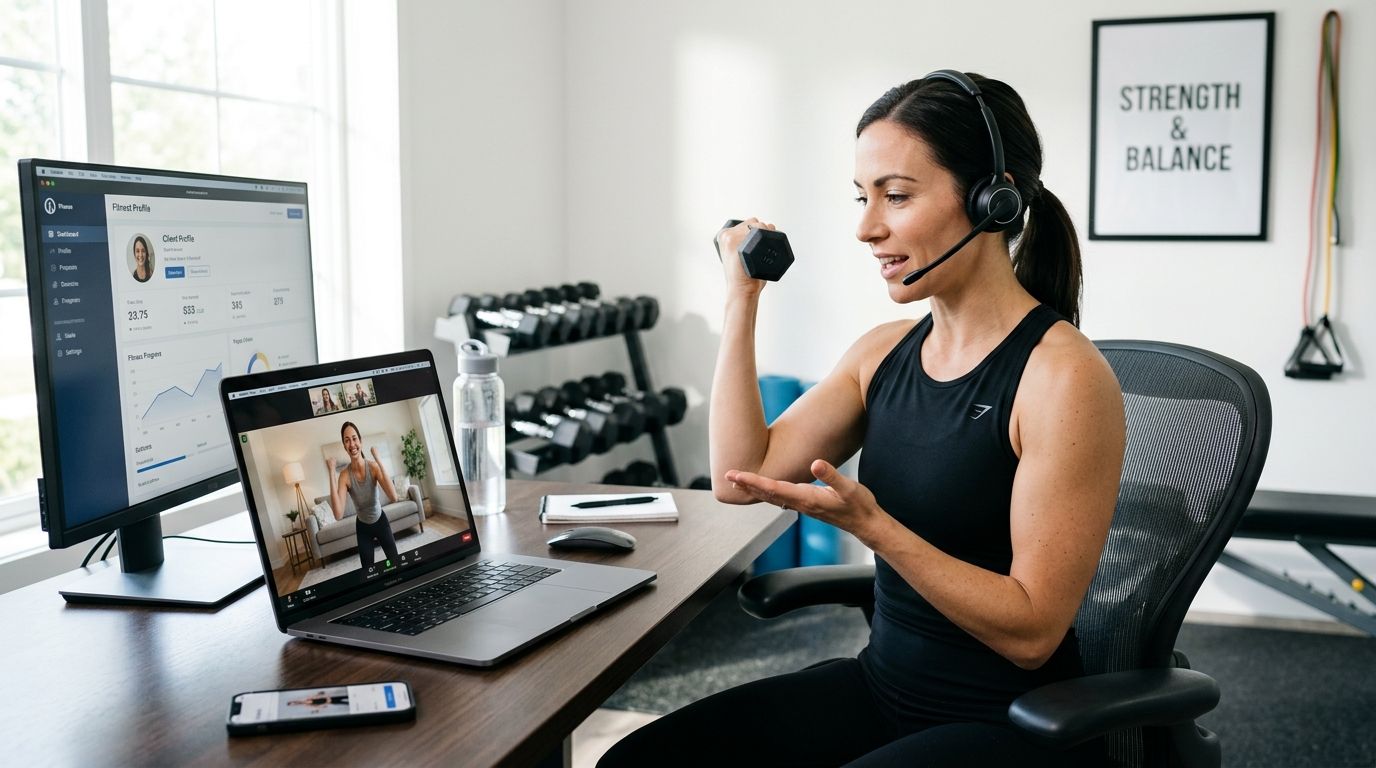
Telehealth for personal trainers is a way to get clients (and yourself) in front of a licensed clinician within the same day, without canceling a training block or sending someone to urgent care for a rolled ankle. Trainers see injuries and nagging pain before anyone else does, but most aren't credentialed to diagnose them — the gap between "that looks like it needs a doctor" and an actual appointment is where telehealth earns its keep in 2026.
- Telehealth for personal trainers routes acute strains, chronic joint pain, and nutrition questions to licensed clinicians without an ER trip.
- NowCare's virtual urgent care handles skin issues, minor injuries, and everyday client complaints under one flat-rate 1-month plan.
- Foot and ankle overuse injuries — plantar fasciitis, stress fractures, heel pain — are the most common referral trainers underestimate.
- Self-employed trainers without employer coverage can use telehealth as their own primary access point, not just a client referral tool.
Why telehealth matters for personal trainers
Trainers are the first line of observation for a huge share of musculoskeletal complaints in 2026 — a client mentions a tight calf, a clicking knee, or numbness in their fingers mid-set, and the trainer has to decide in real time whether to modify the workout or tell the client to get it checked. Get that call wrong in either direction and you either push through an injury or lose a paying client to a two-week wait for a specialist.
Most trainers are also 1099 contractors or solo studio owners without employer-sponsored health coverage. That means their own aches — the shoulder from years of demonstrating lifts, the plantar fasciitis from standing on concrete floors all day — go untreated longer than they should. Telehealth for personal trainers solves both problems: a same-day channel for client triage, and an access point for the trainer's own care, at NowCare.
How personal trainers can use telehealth without slowing down sessions
Screen clients for red-flag symptoms before you keep programming
Before any telehealth visit gets booked, trainers need a working list of what actually warrants stopping a session. This costs nothing and takes five minutes to build into your intake form.
- Sudden numbness or tingling that doesn't resolve within a set or two
- Joint locking, giving way, or visible swelling that appeared during the session
- Chest pain, dizziness, or shortness of breath disproportionate to effort
- Pain that gets worse with rest instead of better
- A wound, rash, or skin change that wasn't there last session
- Fever or flu-like symptoms showing up mid-workout
Log injury patterns across your client roster
A single tweak is noise. The same tweak showing up in three clients doing the same movement is a programming problem, and the same complaint recurring in one client over multiple weeks is a medical one.
- Track complaints by body region and movement pattern, not just by client name
- Flag anything that repeats across two or more consecutive sessions
- Note whether pain is load-dependent (worse under weight) or constant
- Separate "soreness that fades in 48 hours" from "pain that doesn't"
- Keep this log outside your programming software so it survives a platform switch
Get an acute injury looked at the same day
Once a client hits a red flag, the manual path is calling around for a same-day urgent care slot or telling them to wait for their primary care doctor — both of which usually mean losing that client's training day and sometimes their next few weeks. This is where a same-day virtual visit changes the math: a client with a rolled ankle, a strained hamstring, or an unexplained rash can get seen from the gym parking lot instead of driving across town.
NowCare's telehealth for sports injury assessment pathway exists for exactly this — a licensed clinician reviews the injury, rules out what needs in-person imaging, and gives the client (and you) a clear answer on whether to modify training or shut it down entirely.
- Book the visit before the client leaves the facility, not after
- Have the client describe mechanism of injury exactly as it happened
- Ask the clinician directly: "cleared to train modified, or full rest?"
- Get written guidance you can reference in your own programming notes
Route chronic joint and tendon pain to the right specialist
Overuse injuries build slowly, which is exactly why trainers miss them until a client can barely walk up stairs. Foot and ankle complaints — heel pain, plantar fasciitis, stress fractures — are among the most common overuse injuries in trainers' rosters and the most often waved off as "just tight calves."
- Track how long a complaint has persisted before referring out — past 10-14 days without improvement, it needs a clinician, not more stretching
- For heel and arch pain, ask about morning stiffness — a classic plantar fasciitis marker
- For knee or shoulder pain that limits range of motion, don't keep loading through it
- Send clients toward a telehealth visit built for the specific joint rather than a generic "see a doctor" nudge — vague referrals get ignored
Build recovery and nutrition guidance into your programming
Programming is only half the job for a lot of trainers' clients — recovery, sleep, and nutrition questions come up constantly, and most trainers aren't licensed to answer the medical side of those questions even though clients ask anyway.
NowCare's telehealth for sports performance nutrition coaching gives trainers a place to send clients whose questions go past programming — fueling around training blocks, recovery nutrition, or general performance questions that need a clinician's input rather than a trainer's guess.
- Keep a clear line between "programming advice" and "medical nutrition advice"
- Refer clients with disordered eating patterns immediately, don't attempt to coach through it
- Send clients on GLP-1 medication to a clinician-guided nutrition conversation, not a generic macro plan
- Document when you've referred a nutrition question out, for your own liability record
Protect your own bandwidth as a solo practitioner
Trainers running their own studio or working 1099 across multiple gyms in 2026 often have no employer health plan and no time to sit in a waiting room between sessions. That's a business continuity problem as much as a personal one — an untreated shoulder or a missed sinus infection turns into cancelled sessions and lost income.
A flat-rate telehealth plan built for people who can't take a half-day off for a doctor's appointment solves this directly. NowCare's telehealth platform for solo practitioners is built around exactly this constraint — visits that fit between clients instead of around a clinic's schedule.
- Keep your own intake and history on file so repeat visits move faster
- Use telehealth for your own recurring aches before they turn into a missed week of work
- Treat your own care with the same urgency you apply to client red flags
- Don't wait for a slow day that never comes — book the visit now
Comparing telehealth options for personal trainers
| Option | Best for | Key limitation |
|---|---|---|
| NowCare Virtual Urgent Care | Same-day read on client rashes, minor injuries, everyday symptoms | Not built for ER-level trauma or fractures needing imaging |
| NowCare sports injury assessment pathway | Acute strains, sprains, or overuse pain needing triage before continuing training | A suspected fracture still needs an in-person X-ray |
| In-person urgent care clinic | Same-day imaging or in-person wound care | Travel time and scheduling eat into the training day |
| Self-monitoring (rest, ice, load modification) | Minor soreness with zero red-flag symptoms | Delays real diagnosis if pain doesn't improve within days |
| Waiting for a PCP referral to a specialist | Long-term chronic condition management | Scheduling often runs weeks out, stalling programming decisions |
NowCare's virtual urgent care and sports injury pathway win on speed — same-day access beats a multi-week specialist wait for anything that isn't a fracture or trauma case. Self-monitoring stays fine for low-grade soreness; it's a bad call for anything that hasn't improved in over a week.
Get a client or yourself seen today
Same-day virtual visits with licensed clinicians, no ER trip required.
Common mistakes personal trainers make with client health issues
- Treating every complaint as a programming fix. Not every tight hip is a mobility problem — persistent pain that doesn't respond to stretching or load changes needs a clinician, not another warm-up drill.
- Sending clients to search engines instead of a licensed clinician. "Just Google it and see" delays real diagnosis and puts the trainer in the position of interpreting medical information they're not credentialed to interpret.
- Not documenting referrals. If you told a client to see a doctor and they didn't, and something worsens, you want a record that you flagged it — verbally telling someone once isn't documentation.
- Skipping their own care because gym hours don't match clinic hours. Trainers work early mornings and evenings when most clinics are closed, which is the exact scenario telehealth is built for.
- Assuming GLP-1 or weight-loss clients don't need clinician oversight during training. Medication changes affect energy, hydration, and recovery — programming around them without clinical input is a liability gap, not a shortcut.
FAQ
What's the best telehealth option for personal trainers with injured clients?
NowCare's virtual urgent care and sports injury assessment pathway both offer same-day visits, which fits the pace of a training schedule better than an in-person urgent care wait. Trainers use it to get a same-day read before deciding whether to modify or pause a client's programming.
Can a personal trainer refer a client to telehealth?
Yes, trainers regularly point clients toward a telehealth visit instead of a vague "go see a doctor" suggestion. A specific referral to a same-day virtual visit gets acted on far more often than a generic recommendation.
Is telehealth useful for a client's ankle sprain or strain?
Telehealth works well for triaging a sprain or strain to determine if imaging is needed, and for guiding load modification while it heals. A clinician reviewing the injury the same day it happens beats waiting days for an in-person slot.
How fast can a trainer get a client seen for foot pain?
Same-day virtual visits are standard for foot and ankle complaints like heel pain or plantar fasciitis in 2026. Waiting past two weeks on a persistent foot complaint typically means it needs more than rest.
Do self-employed personal trainers need their own health coverage?
Most 1099 trainers don't have employer-sponsored coverage, which is exactly why a flat-rate telehealth plan matters for their own recurring aches. It replaces the calculation of whether an ache is worth a half-day off.
Can telehealth handle sports nutrition coaching for clients on GLP-1 medication?
Yes — nutrition questions tied to GLP-1 medication need clinician input rather than a trainer's generic macro guidance, since the medication changes appetite and energy levels. A telehealth nutrition visit keeps that conversation in a clinician's hands.
What's the difference between telehealth and an in-person sports medicine visit?
Telehealth handles triage, minor injury assessment, and referral decisions remotely, while in-person visits are still needed for imaging like X-rays or MRIs. Most acute complaints start with a telehealth visit to determine if an in-person step is even necessary.
How much does telehealth cost for a personal trainer without insurance?
Telehealth plans are typically sold as flat-rate monthly plans rather than per-visit fees, which makes budgeting predictable for a self-employed trainer. Check the specific plan page for current pricing before booking.
One last thing
The complaint trainers underestimate most in 2026 isn't the dramatic ankle roll — it's slow-building foot pain. Heel pain, plantar fasciitis, and stress fractures show up constantly in clients who stand or run for a living, and trainers wave it off as "tight calves" for weeks before anyone gets it looked at. If a client's foot pain is worse in the morning and hasn't improved in ten days, that's not a stretching problem.


