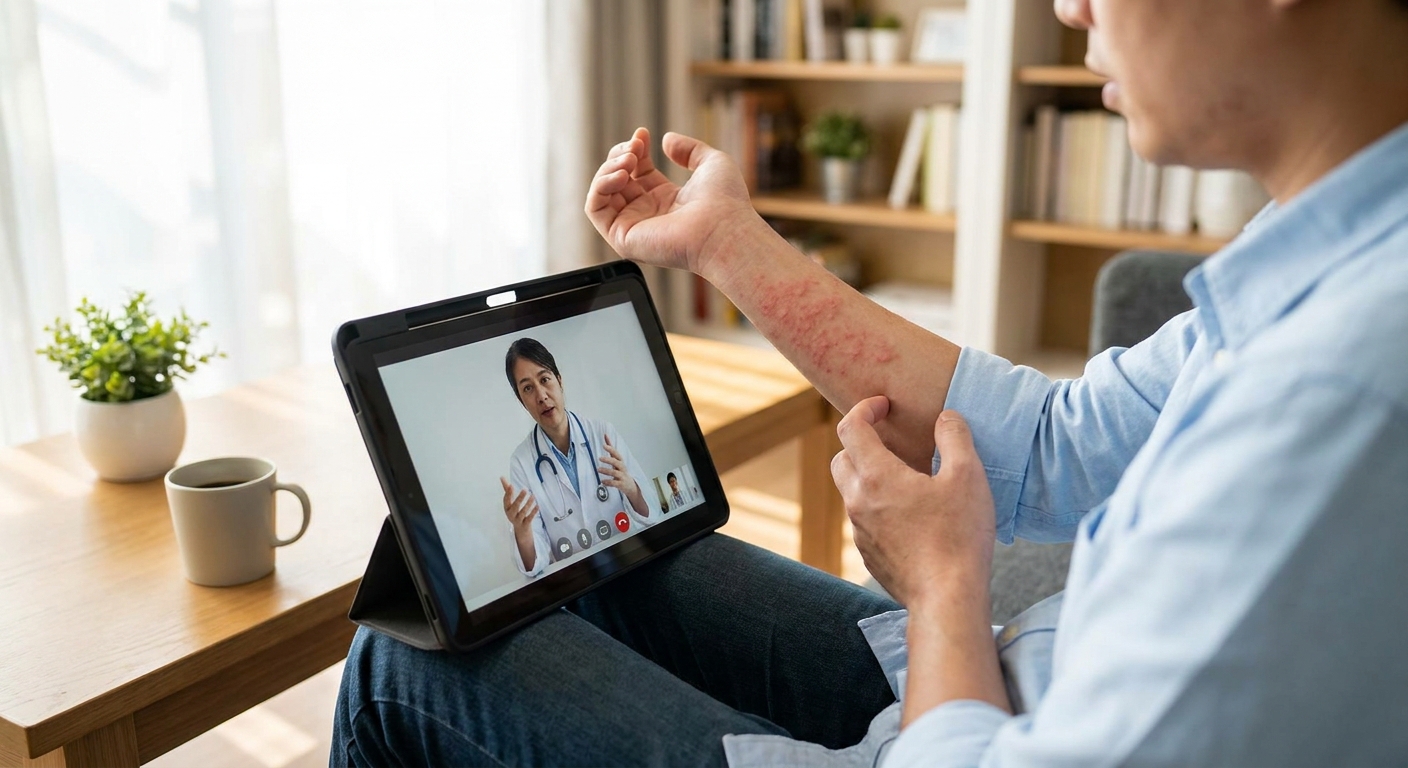
Poison ivy, oak, and sumac rashes rarely need an ER trip in 2026 — a licensed clinician can usually diagnose the reaction from photos and prescribe treatment the same day.
- Telehealth poison ivy rash care works for mild-to-moderate reactions under 10% body coverage — Buy the photo-upload visit route.
- NowCare's skin conditions track handles topical and oral steroid prescriptions for poison ivy rash in 2026 — Consider it first.
- Facial swelling, eye involvement, or breathing trouble needs in-person care immediately — Skip telehealth for those symptoms.
- Rashes covering over 20% of the body or lasting past 2-3 weeks need in-person follow-up — telehealth alone means Wait on full clearance.
Why this matters
Urushiol oil from poison ivy, oak, or sumac triggers a rash 12 to 72 hours after skin contact, and untreated cases run 2 to 3 weeks before clearing on their own. That's a long stretch to sit on an itch that's spreading to new skin every time you scratch it and touch another patch of body.
Most cases don't need a dermatologist in an exam room. A clinician can look at a photo, ask about spread and blistering, and decide between an over-the-counter topical, a prescription-strength steroid cream, or an oral prednisone taper. The diagnosis is visual first, history second — which is exactly what telehealth is built for.
The catch: not every rash is contact dermatitis, and not every contact dermatitis case is mild. A NowCare visit works when the pattern is clear and the reaction is contained. It doesn't replace in-person care when the face, eyes, genitals, or airway are involved.
Who this is for
This guide is for anyone with a new rash after yard work, hiking, gardening, or clearing brush who suspects poison ivy, oak, or sumac — and for parents managing the same rash on a kid who won't stop scratching. It's built around adults and children with mild-to-moderate reactions: linear or patchy blistering, intense itching, redness confined to arms, legs, or torso. It is not built for anyone with facial swelling, eye involvement, difficulty breathing, or a rash covering more than a fifth of the body — those cases need in-person evaluation, not a video visit.
What to look for in telehealth for poison ivy and skin rashes
Photo-based intake before the visit
A text-only description of "red, itchy, blistery" tells a clinician almost nothing useful. Platforms that collect photos during intake let the clinician confirm the blister pattern, check for secondary infection (yellow crusting, spreading warmth), and rule out look-alikes like shingles or cellulitis before the visit even starts.
Same-day or next-day scheduling
Poison ivy rashes get worse fast in the first 48 to 72 hours as urushiol spreads on skin and clothing. A booking window of 3-5 days defeats the purpose — you want a visit today or tomorrow, while a topical or oral steroid can still shorten the flare instead of just managing a rash that's already peaked.
Prescription authority for topical and oral steroids
Mild cases respond to an over-the-counter hydrocortisone. Moderate-to-severe cases need prescription-strength triamcinolone or a 7 to 14 day oral prednisone taper. A telehealth visit that can't write that prescription just sends you back to urgent care anyway — confirm the platform's clinicians can prescribe, not just advise.
Clear escalation criteria to in-person care
A reasonable platform tells you upfront when it will say no: facial swelling, eye involvement, widespread blistering over 20% of the body, or any sign of a systemic allergic reaction. If a service never mentions escalation, that's a sign it's optimizing for visit volume, not for getting you the right level of care.
Follow-up access if the rash doesn't respond
Prednisone tapers sometimes need adjustment, and secondary bacterial infections from scratching show up 3 to 5 days into treatment. Look for a platform that includes a follow-up message or visit if the rash isn't improving by day 5 to 7, not a one-and-done prescription with no way to circle back.
Top picks for telehealth poison ivy and rash care
NowCare Skin Conditions & Acne track — the primary pick. This track handles photo-based rash evaluation and can route to a prescription-strength topical or oral steroid when the reaction is moderate. One spec that matters: intake includes a photo upload step before the clinician joins, which cuts the average visit down to a diagnosis-and-prescribe conversation instead of a guessing game. Buy — check the telehealth for skin conditions and acne page for what's covered.
NowCare Urgent Care Online Appointment for Allergy Flare-Ups — the fast-track pick. Built for reactions that are spreading quickly or itching bad enough to disrupt sleep, this route prioritizes same-day scheduling over routine booking windows. Consider it when you need eyes on the rash within hours, not days — see urgent care online appointments for allergy flare-ups.
In-person urgent care or ER — the escalation pick. One number that matters: facial swelling or eye involvement from poison ivy can progress to airway compromise within hours in rare cases, and no photo-based visit should attempt to manage that remotely. Skip telehealth entirely and go in person if the rash touches the face, eyelids, or genitals, or if you're having any trouble breathing.
Generic video-only telehealth without photo upload — the wildcard, and mostly a skip. A service that diagnoses a rash off a verbal description alone misses blister pattern, secondary infection signs, and look-alike conditions like shingles roughly as often as it gets them right. Skip any platform that doesn't ask for photos before or during the visit — the diagnosis quality drops without them.
What to avoid
- A visit with no photo requirement. Verbal-only descriptions of a rash lead to more misdiagnoses and more callbacks than a five-minute photo upload would have prevented.
- A platform that won't name its escalation criteria. If a service can't tell you upfront when it sends patients to in-person care, it's not built for a condition where 5-10% of cases need exactly that.
- Treating a spreading rash as "wait and see" past day 3. Poison ivy rashes that are still spreading after 72 hours usually need a prescription steroid, not another week of hydrocortisone.
See if a telehealth visit fits your rash
Check what a first visit covers before you book.
Verdict comparison
| Option | Photo intake | Scheduling | Prescription authority | Verdict |
|---|---|---|---|---|
| NowCare Skin Conditions & Acne track | Yes | Same/next-day | Topical + oral steroids | Buy |
| NowCare Urgent Care for Allergy Flare-Ups | Yes | Same-day priority | Topical + oral steroids | Consider |
| In-person urgent care or ER | N/A (in person) | Walk-in | Full range, injections | Skip unless severe |
| Generic video-only telehealth | No | Varies | Limited, verbal-only diagnosis | Skip |
FAQ
Can telehealth diagnose a poison ivy rash?
Yes — a licensed clinician can usually diagnose poison ivy, oak, or sumac rash from photos and symptom history in 2026, without an in-person exam. Confirmation depends on a clear blister pattern and no signs of facial or systemic involvement.
What's the best telehealth option for a spreading rash?
A same-day urgent care telehealth visit built for allergy flare-ups is the better choice when a rash is spreading fast, since routine scheduling windows of 3-5 days let the reaction peak before treatment starts. NowCare's urgent care track for allergy flare-ups prioritizes same-day booking for exactly this.
How much does a telehealth visit for poison ivy cost?
Cost varies by platform and insurance coverage, so check current pricing directly with the provider before booking. Ask whether the visit fee includes any prescription sent to your pharmacy or if that's billed separately.
Is telehealth better than urgent care for a rash?
Telehealth is faster and usually cheaper for mild-to-moderate rashes confined to arms, legs, or torso. In-person urgent care is the better call when the face, eyes, or genitals are involved, or when the rash covers more than 20% of the body.
Do I need an oral steroid for poison ivy?
Oral prednisone is typically reserved for moderate-to-severe reactions and runs a 7 to 14 day taper, while mild cases respond to a topical steroid cream. A clinician decides based on how much skin is affected and how bad the blistering is.
How long does a poison ivy rash last without treatment?
Untreated poison ivy rash typically runs 2 to 3 weeks before clearing. Prescription-strength treatment started within the first 72 hours usually shortens that window noticeably.
When should I skip telehealth and go to the ER?
Go in person immediately if there's facial swelling, eye involvement, or any trouble breathing — those are signs of a reaction telehealth shouldn't manage remotely. A rash covering more than 20% of the body also warrants an in-person look.
Can telehealth prescribe medication for a rash the same day?
Yes, when the platform has prescribing clinicians and same-day scheduling — the prescription can be sent to a local pharmacy right after the visit. Confirm prescribing authority before booking, since some platforms only offer advice, not prescriptions.
One last thing
The detail most people miss: urushiol oil stays active on unwashed clothing, tools, and pet fur for up to a year, which is why the same rash keeps coming back on the same person in the same household. A telehealth visit treats the rash on your skin — it doesn't wash the garden gloves. Do both in 2026, or you'll be booking the same visit again in three weeks.


