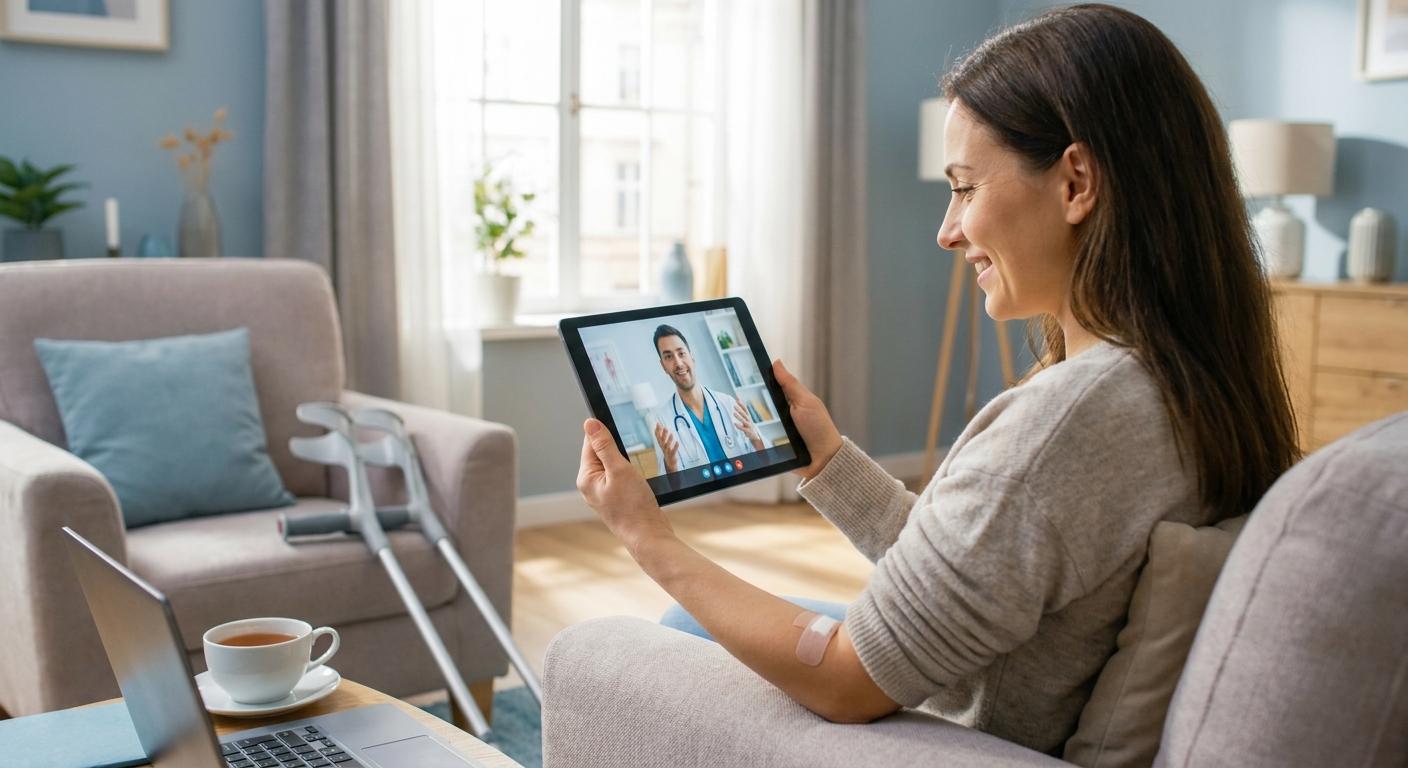
A post-surgery follow-up over telehealth works when a licensed clinician can actually assess your incision, ask the right questions, and catch problems early — it doesn't work when someone needs to physically touch a wound, pull a staple, or check for a blood clot. Here's how to tell which one you're dealing with before you schedule a video visit for telehealth post surgery follow up in 2026.
- NowCare covers routine post-op wound checks and medication questions over video visits, not staple or drain removal.
- Telehealth post surgery follow up works best for the 2-week and 6-week incision checks with no complications present.
- Skip video visits for fever above 101°F, drainage that smells, or any incision that's opened back up — see someone in person.
- Diabetic foot surgery patients need tighter monitoring; photo-based wound tracking catches infection signs days earlier.
- Rural and Medicare patients save the most time, since a routine podiatry follow-up otherwise means a 45+ minute round trip.
Why this matters
Most foot and ankle surgeries carry a 10-14 day incision check and a 30-day global surgical period where your surgeon or a covering clinician is supposed to keep eyes on your recovery. A large share of those check-ins are purely visual — is the swelling going down, does the color look right, are the edges of the incision closing. That's exactly what a camera and a licensed clinician can evaluate without you driving anywhere.
The part that gets missed: not every follow-up qualifies. If your surgeon needs to physically remove sutures, change a wound vac dressing, or press on the site to check for fluid buildup, no camera resolution fixes that. Telehealth for post-surgery follow-up visits is a scheduling and access upgrade for the visits that don't require hands-on work — not a replacement for the ones that do.
Who this is for
This is for anyone recovering from a foot or ankle procedure — bunionectomy, hammertoe correction, Achilles repair, diabetic foot debridement, ankle fracture fixation — who's been told to "check in" at set intervals but doesn't want to burn a half-day off work or arrange transportation for a five-minute visual check. It's also for caregivers managing recovery for a senior or diabetic patient who can't easily get to an office every two weeks.
What to look for in telehealth for post-surgery follow-up
A licensed podiatric clinician, not a generalist
A post-op foot or ankle check needs someone trained to read surgical incisions specifically — swelling patterns, suture line color, early signs of dehiscence. A general urgent-care video visit will often just tell you to "see your surgeon," which defeats the purpose. Confirm the platform routes foot and ankle follow-ups to a clinician with that scope, not a rotating generalist pool.
Photo and video wound documentation
A single video call misses detail a static photo catches at higher resolution and can be compared side by side against the prior week. Platforms that log photos into your chart over time give the clinician a real trend line instead of a one-off impression. Ask whether photos get stored and reviewed against your baseline, not just glanced at once.
A clear escalation path
If the clinician sees something concerning — drainage, redness spreading past the incision line, a fever — there needs to be a defined next step, not a vague "go to the ER if it gets worse." NowCare builds that escalation into the visit itself: the clinician either resolves it on the call, adjusts your care plan, or tells you exactly where to go next.
Medication and prescription continuity
Post-op recovery usually means pain management, sometimes antibiotics, sometimes both. A follow-up visit that can't touch your prescriptions just becomes a referral back to whoever performed the surgery — which erases the time savings. Confirm the clinician can adjust or refill what's medically appropriate during the same call.
Scheduling that matches your actual recovery timeline
Most foot and ankle procedures follow a predictable rhythm: 48-hour check, 2-week incision check, 6-week functional check. A platform that only offers same-day or next-day slots without structure around that timeline forces you to re-explain your surgery history every time. Look for scheduling that lets you book the specific check your surgeon ordered.
Post-op scenarios telehealth actually covers
Routine 2-week incision check, no staples or drains present. Swelling reduction and incision color are visual assessments a clinician can make on camera in under 15 minutes. Verdict: Good fit for telehealth.
Diabetic foot surgery monitoring for infection signs. Diabetic patients face higher infection risk post-surgery, and daily or twice-weekly photo check-ins catch problems faster than waiting for a scheduled office visit. This pairs well with ongoing telehealth for diabetes management if you're already managing blood sugar alongside recovery. Verdict: Good fit, with tighter monitoring frequency.
Suture or staple removal. This requires hands-on tools and direct contact with the wound — no camera substitutes for that. Verdict: Not appropriate for telehealth, book an in-person visit.
Post-op medication question or refill. "Is this level of pain normal at day 5?" or "can I get one more week of my prescription" are conversations, not physical exams. Verdict: Good fit for telehealth.
Fever, spreading redness, or foul-smelling drainage. These are signs of possible infection that need in-person evaluation and possibly labs or imaging same day. Verdict: Skip telehealth, seek in-person or urgent care immediately.
What to avoid
- Generic wound-check apps with no podiatry-specific clinicians. A photo review from someone unfamiliar with foot and ankle surgical patterns is a guess, not an assessment.
- Urgent care video platforms that default to "go to the ER" for anything below the ankle. That's not triage, that's avoidance of liability, and it wastes your time.
- Any platform that doesn't document your photos and notes in an ongoing chart. Without a record, every follow-up starts from zero, and nobody can spot a slow-developing trend.
Verdict comparison
| Scenario | Telehealth fit | Typical timing | 2026 verdict |
|---|---|---|---|
| 2-week incision check, no complications | High | 15-min video slot | Good fit |
| Diabetic foot post-op monitoring | High, with frequency increase | 2x weekly photo check-ins | Good fit |
| Suture/staple removal | None | Requires office tools | Not appropriate |
| Medication question or refill | High | Same-day possible | Good fit |
| Fever or spreading infection signs | None | Needs same-day in-person eval | Skip telehealth |
FAQ
What's the best way to do a post surgery follow up over telehealth in 2026?
Book a video visit for the routine incision or medication check and confirm a licensed clinician with foot and ankle experience is reviewing your photos. Save in-person visits for staple removal, drain changes, or any sign of infection.
Is telehealth ok for suture or staple removal?
No. Suture and staple removal requires physical tools and direct contact with the incision, so this always needs an in-person visit regardless of how the rest of your recovery is going.
How soon after foot surgery can I do a video follow-up visit?
Most patients can do a video check within 48 hours of surgery for a general well-being review, with the first true incision check typically happening around day 10 to 14. Your surgeon's specific instructions always take priority over general timing.
Does insurance cover telehealth post-op visits?
Coverage varies by plan and by whether the visit falls inside your surgeon's 30-day global period, so check your specific benefits before booking. Many plans in 2026 do reimburse telehealth follow-ups the same as in-office visits.
Can a telehealth podiatrist see signs of infection through photos?
Yes, for early signs like spreading redness, unusual swelling, or drainage color change, a licensed clinician can flag concerns from clear photos. Anything ambiguous or combined with fever should still trigger an in-person visit.
What happens if my incision looks infected during a video visit?
The clinician should either adjust your care plan on the same call if it's mild, or direct you to an in-person or urgent care visit immediately if it looks more serious. A platform without that escalation path isn't equipped to handle post-surgical care.
How much does a telehealth post-surgery follow up cost in 2026?
Cost depends on your insurance and whether the visit falls within your surgeon's global surgical period, so check current pricing and coverage details directly with your provider. Self-pay visits are typically priced lower than an in-office equivalent.
Is telehealth good for diabetic foot surgery follow-up specifically?
Yes, and it's often better than waiting for scheduled office visits, since diabetic patients benefit from more frequent monitoring than a standard 2-week check. Photo-based tracking between visits catches slow-developing infection earlier than a single monthly appointment.
One last thing
The visits people skip most often after foot surgery aren't the big ones — they're the boring day-5 "is this normal" check-ins, because driving somewhere for a five-minute reassurance feels like overkill. Those are exactly the visits telehealth was built for, and skipping them is how a manageable issue turns into an in-person emergency two weeks later.


