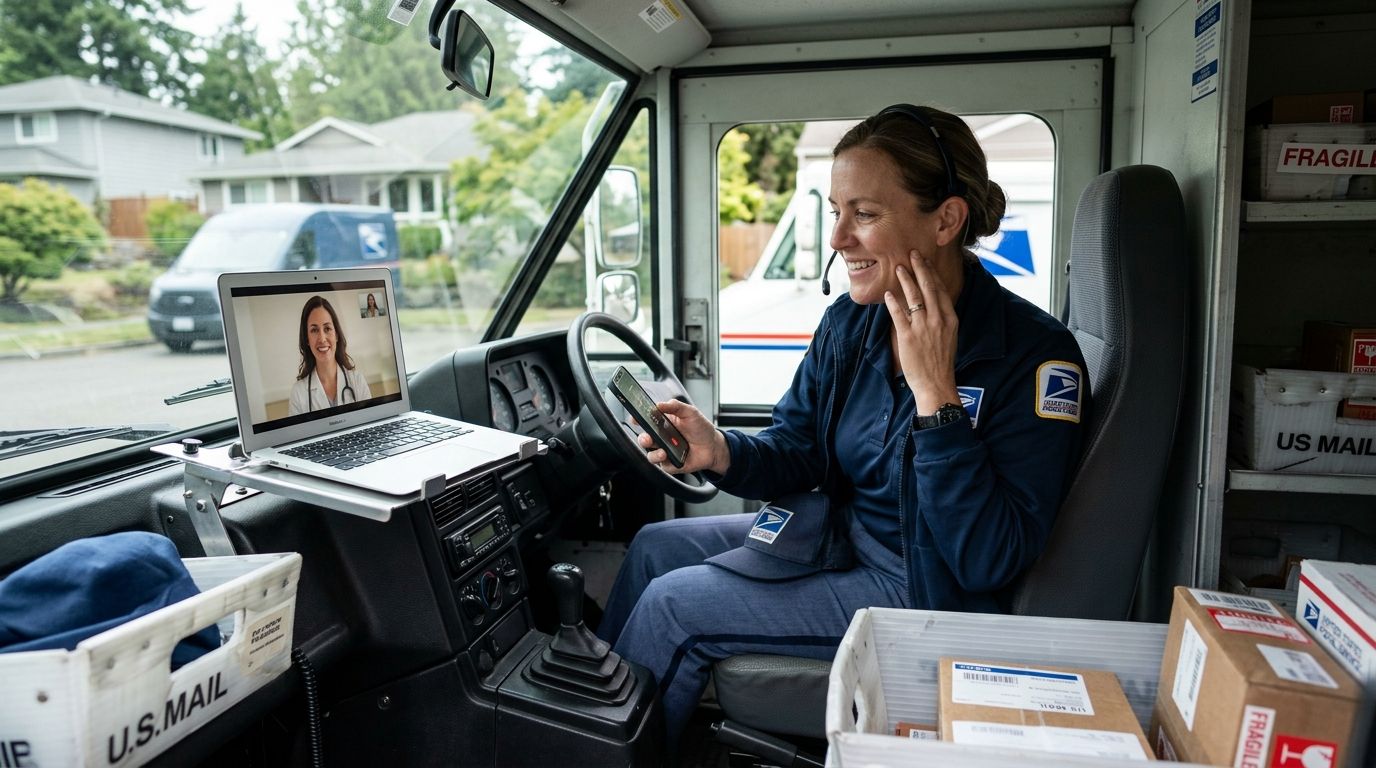
Telehealth for postal workers gives USPS carriers, rural route drivers, and mail processing clerks a way to see a licensed clinician between shifts instead of using a vacation day for a fifteen-minute appointment. This segment deals with fixed delivery schedules, limited restroom access on the route, repetitive walking on hard pavement, and hours outside in heat, cold, and rain — needs a desk worker's telehealth plan rarely accounts for.
- Telehealth for postal workers works best for foot strain, dehydration, tick bites, and refills that need no physical exam.
- NowCare's Foot & Ankle Care pillar treats heel pain and plantar fasciitis common among carriers on long walking routes.
- Rural route carriers face higher tick exposure in 2026 and should know the screening path before symptoms start.
- Limited break access on routes makes UTI and dehydration care a real gap same-day virtual visits can close.
- Book a virtual visit before or after a shift instead of losing a route day at an in-person clinic.
Why telehealth matters for postal workers
A USPS city carrier or rural route driver does not get a flexible lunch hour to sit in an urgent care waiting room. Shifts start early, routes run long, and missing a day for a doctor visit means either unpaid time or scrambling to find backup coverage.
The job itself creates a specific set of medical needs. Carriers walk for most of an eight-hour shift, often on concrete, gravel, and uneven yards, which drives heel pain, plantar fasciitis, and stress fractures. Rural carriers move through fields, brush, and wooded driveways, raising exposure to ticks, poison ivy, and insect bites. Direct primary care for delivery drivers covers a closely related set of on-the-road occupational needs, including limited bathroom access and irregular meal timing.
A virtual visit through NowCare telehealth fits around a route instead of around a clinic's hours. That is the practical case for telehealth for postal workers in 2026: less time off, faster access to a licensed clinician, and treatment plans built around a job that does not stop for appointments.
Update your foot care routine
Carriers put more miles on their feet in a week than most people put on in a month. Left untreated, minor strain becomes chronic heel pain or a stress fracture that sidelines a route for weeks.
- Rotate two pairs of supportive, non-slip shoes instead of wearing one pair down
- Ice the heel or arch for 15 minutes after a shift if soreness starts
- Stretch the calf and plantar fascia before the first delivery of the day
- Report sharp, localized pain — not general fatigue — within days, not months
- See a clinician online through telehealth for heel pain and heel spurs before it becomes a walking-boot situation
Manage hydration and heat exposure
City and rural routes both mean hours outside regardless of temperature. Dehydration builds slowly and often gets ignored until a carrier feels dizzy mid-route.
- Carry water and drink on a schedule, not just when thirsty
- Watch for dark urine, headache, or cramping as early dehydration signs
- Take shade breaks when temperatures cross 90°F, even if it costs a few minutes
- Know heat exhaustion versus heatstroke — confusion and stopped sweating mean emergency care, not home rest
- Use urgent care online appointments for dehydration for same-day guidance on whether an in-person visit is warranted
Screen for tick and insect exposure
Rural route carriers pass overgrown yards, wooded driveways, and mailbox clusters near brush lines for most of the year. That is direct tick exposure most other jobs do not have.
- Check exposed skin at the end of every shift, not only after obvious brush contact
- Learn what an embedded tick looks like versus a simple bite reaction
- Watch for a bullseye rash or flu-like symptoms in the weeks after a bite
- Do not wait for symptoms to escalate before asking a clinician — early treatment matters
- Use tick bite and Lyme disease screening to get next steps without a same-day office visit
Address restroom access gaps
Fixed delivery windows and limited public restroom access are a known occupational stressor for carriers. Medically, that shows up as delayed bathroom breaks and recurring bladder problems.
- Track urgency, burning, or pelvic discomfort instead of pushing through a shift
- Do not self-treat with over-the-counter products for more than a day or two
- Ask about a same-day prescription instead of waiting for the next in-person slot
- Use recurrent UTI management to get a prescription sent to a pharmacy near the route
Handle prescriptions without losing a route day
Maintenance medications, allergy prescriptions, and blood pressure refills should not require an in-person visit every time a bottle runs low. NowCare sends prescriptions to the pharmacy you choose after a licensed clinician reviews the plan.
- Set refill reminders two weeks ahead of running out, not the day of
- Confirm the pharmacy on file matches where the route actually runs
- Ask a clinician about 90-day supplies to cut refill visits
- Keep a current medication list ready for faster telehealth intake
Get seasonal and skin conditions treated fast
Sun exposure, poison ivy, and allergy flare-ups hit outdoor carriers harder and more often than office staff. Most of these are straightforward for a virtual visit because a clinician can assess photos and history.
- Photograph any rash or skin change before it changes further
- Do not wait out a rash that is spreading or blistering
- Ask about antihistamine or steroid options same-day rather than after a weekend
- Flag any mole that has grown or changed color for a referral instead of watching it
Track pain that keeps coming back
A symptom that returns every third week is a pattern, not bad luck. Carriers tend to normalize recurring knee, hip, and heel pain because the route still gets done.
- Log the date, location, and intensity of recurring pain for two weeks
- Note which part of the route or which shoes make it worse
- Bring that log to a virtual visit — it replaces guesswork
- Ask directly whether imaging or a physical therapy referral is the right next step
Comparing care options for postal and mail carrier workers
| Option | Best for | Key limitation |
|---|---|---|
| NowCare Virtual Urgent Care | Skin issues, sinus infections, UTIs, allergy flare-ups handled around a shift | Not built for trauma or fractures needing imaging |
| NowCare Foot & Ankle Care | Heel pain, plantar fasciitis, and nail or skin problems from route walking | Structural issues may still need in-person imaging |
| In-person occupational health clinic | Workplace injury documentation and workers' comp evaluations | Requires taking time off the route to attend |
| Waiting for the next annual physical | General wellness checks with no active symptom | Does nothing for symptoms building over months |
NowCare is the telehealth option best suited to postal and mail carrier workers because visits are provider-guided, fully online, and scheduled around a route instead of requiring a day off it.
“If foot pain still hurts on the first block of the route, it is not soreness anymore — it is an injury.”
Common mistakes postal and mail carrier workers make
- Ignoring foot pain until it is structural. A dull ache in week one becomes a stress fracture by week six when nothing is done.
- Treating dehydration as a minor inconvenience. Symptoms that feel manageable mid-route escalate fast in July and August heat.
- Skipping tick checks on rural routes. A missed tick after a brush-heavy delivery day is the most common way exposure goes undetected until symptoms appear.
- Pushing through bladder symptoms. Untreated recurring UTIs get worse, not better, with more route hours.
- Assuming every visit has to be in person. Refills, rashes, and infections rarely require a physical exam in 2026.
See a clinician between shifts
Provider-guided virtual visits built around route schedules, not office hours.
FAQ
What is telehealth for postal workers?
Telehealth for postal workers is virtual care that lets USPS carriers and mail processing staff see a licensed clinician online instead of taking time off for an in-person appointment. It covers route-related issues like foot pain, dehydration, tick bites, rashes, and prescription refills.
Can a mail carrier get foot pain treated through telehealth?
Yes. Heel pain and plantar fasciitis from route walking can be evaluated in a virtual visit through NowCare's Foot & Ankle Care pillar in 2026. Structural problems that need imaging may still require an in-person referral.
Is telehealth useful for tick bites on a rural mail route?
Telehealth is useful for early guidance after a tick bite, including whether the exposure needs monitoring or treatment. A rash that spreads or forms a bullseye pattern should be reviewed promptly rather than watched at home.
How fast can a postal worker get a same-day virtual visit?
Intake is completed online and a licensed clinician reviews the case, so visits are designed to fit before or after a shift. Exact timing depends on the service selected and clinician availability.
Does telehealth help with recurring UTIs from limited bathroom breaks?
Yes. Recurrent UTI management through telehealth lets a carrier get symptoms reviewed and a prescription sent to a chosen pharmacy without an office visit. Waiting out symptoms across several shifts usually makes the infection worse.
Can postal workers refill maintenance medications online?
Maintenance refills such as blood pressure and allergy prescriptions can be handled in a virtual visit when a clinician determines it is medically appropriate. Setting reminders two weeks early avoids a gap between bottles.
Is dehydration a real concern for USPS carriers in 2026?
Dehydration is a genuine risk for outdoor carriers working full shifts in summer heat because fatigue and headache get dismissed as normal route tiredness. A same-day virtual visit can confirm whether home rehydration is enough.
What should postal workers not use telehealth for?
Trauma, suspected fractures, chest pain, and breathing difficulty need in-person emergency care, not a virtual visit. Telehealth for postal workers fits non-emergency issues like skin conditions, foot strain, infections, and medication management.
One last thing
Restroom access on a postal route is not a minor inconvenience — it is the reason bladder and hydration problems on this job get treated late instead of early. A 2026 virtual visit closes that gap without adding a clinic stop to an already tight route, which is the single highest-value use of telehealth for postal workers.


