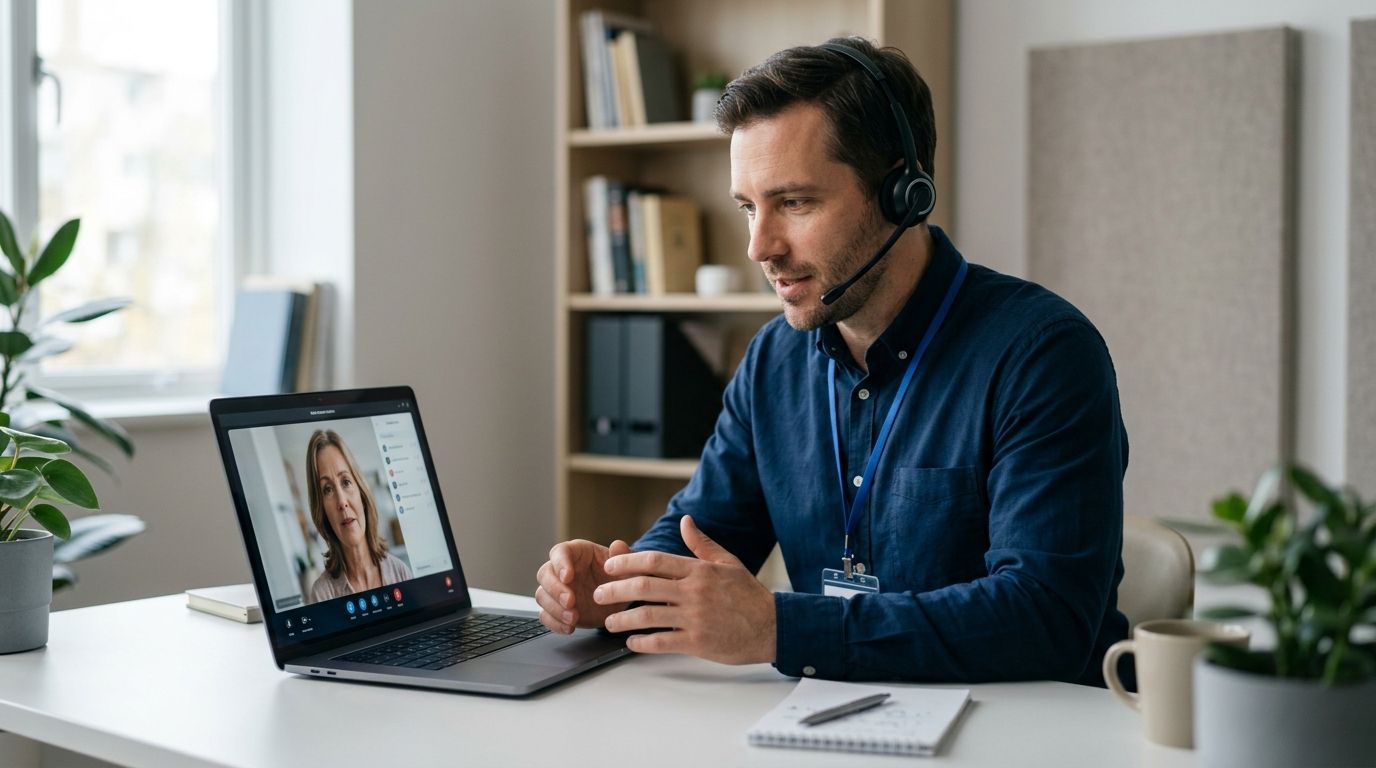
Problem gambling telehealth support is online access to licensed clinicians who screen for compulsive gambling, treat the anxiety and depression that typically ride along with it, and route you to specialized counseling — without an office visit, a referral, or a long wait for an appointment. This guide covers what telehealth actually handles for problem gambling in 2026, what it does not, and the order to do things in.
- Problem gambling telehealth support works best for co-occurring anxiety, depression, and insomnia — not for gambling-specific counseling itself.
- The National Problem Gambling Helpline (1-800-522-4700) is free, confidential, and staffed 24/7 in 2026.
- NowCare treats the mood symptoms tied to compulsive gambling through provider-guided telehealth, not gambling-specific therapy.
- An honest self-screen takes under 10 minutes and is the right first step before any appointment.
- No medication is FDA-approved for gambling addiction itself as of 2026.
Why telehealth support matters for problem gambling
Problem gambling carries a shame factor that keeps people out of waiting rooms. Nobody wants to explain a gambling problem to a receptionist, sit in a lobby, or run into a coworker at a treatment center.
Telehealth removes that friction. A screening, a medication consult, or a referral conversation happens from a phone, on a lunch break, with nobody else in the room. That matters more here than in almost any other condition, because the biggest barrier to treatment for problem gambling is rarely access — it is the moment someone decides to ask for help at all.
Money anxiety, sleep disruption, and depressive symptoms usually show up before someone will say the word gambling out loud to a clinician. NowCare's provider-guided telehealth platform connects patients with licensed clinicians for exactly that layer of care — the mood and anxiety symptoms that make the gambling cycle harder to break — while gambling-specific counseling stays with specialists trained in that work.
NowCare is best for the anxiety, depression, and insomnia that travel with problem gambling; it is not a substitute for a certified gambling counselor.
Screen yourself honestly first
Before any appointment, run an honest self-check. It costs nothing and takes about ten minutes.
- Use a validated tool such as the Problem Gambling Severity Index (PGSI) or the Brief Biosocial Gambling Screen
- Note whether you have chased losses with bigger bets in the last 12 months
- Write down any lying to family about time or money spent gambling
- Check whether you have borrowed money or sold something to fund gambling
- Record how gambling affects sleep, work focus, or mood the next day
A high score is not a diagnosis. It is a reason to call someone today instead of next month.
Call the National Problem Gambling Helpline before anything else
This is the fastest, lowest-friction move available in 2026, and it is free.
- Call or text 1-800-522-4700, operated by the National Council on Problem Gambling and staffed 24/7
- Ask for a state-specific referral to a certified gambling counselor
- Use the chat option if a phone call feels too exposed
- Get connected to in-person or virtual outpatient programs in your state
- Confirm confidentiality rules before sharing details if that matters to you
Treat the anxiety and depression fueling the cycle
Compulsive gambling and mood disorders feed each other — gambling numbs anxiety short-term, then the losses deepen it. This is where telehealth medication management earns its place, and it belongs here at step three, not step one.
- Book a visit through telehealth mental health medication management when anxiety, depression, or insomnia sit alongside the gambling
- Expect a licensed clinician to review your symptoms before anything is prescribed
- Ask directly whether medication is appropriate — treatment happens only when it is medically appropriate
- Have any prescription sent to the pharmacy you choose
- Keep this mentally separate from gambling counseling: one addresses mood, the other addresses the behavior
Get mood symptoms evaluated online
Provider-guided telehealth visit with a licensed clinician. No insurance required.
Build a financial circuit breaker
Willpower rarely survives a bad week. Structural blocks do more work than promises.
- Enroll in your state's self-exclusion registry for casinos and online sportsbooks
- Install gambling-blocking software on every phone and browser you use
- Hand a trusted partner or family member temporary control of discretionary spending
- Freeze your credit if new-account gambling debt is a real risk
- Set bank alerts on large withdrawals and transfers
Join a peer support structure
Isolation keeps the cycle running. Structured peer contact interrupts it.
- Find a Gamblers Anonymous meeting, in person or virtual
- Try SMART Recovery if a 12-step format does not fit you
- Point family members toward Gam-Anon for their own support
- Commit to a recurring schedule instead of attending when you feel like it
Schedule structured follow-up
One call or one visit rarely resets a compulsive behavior pattern. Plan for recurrence.
- Set recurring virtual check-ins if a medication was started
- Track relapse triggers in a short daily journal for at least 90 days
- Assign an accountability partner who knows the real numbers, not the edited ones
- Refill through telehealth rather than letting a prescription lapse mid-treatment
Know when to escalate past telehealth
Telehealth has a ceiling. Some situations need more than a screen and a video call.
- Move to an intensive outpatient program if gambling continues despite counseling and medication
- Consider inpatient treatment when gambling debt has triggered a housing or safety crisis
- Call or text 988 immediately if suicidal thoughts appear at any point
- Loop in a primary care provider when physical symptoms such as chest pain or severe insomnia appear
Comparing your options in 2026
| Option | Best for | Cost | Key limitation |
|---|---|---|---|
| National Problem Gambling Helpline | Immediate confidential contact and state referrals | Free | Not a treatment provider itself |
| Gamblers Anonymous / SMART Recovery | Peer accountability and structure | Free | Not clinical; no medication management |
| NowCare telehealth | Co-occurring anxiety, depression, insomnia | See current pricing on site | No gambling-specific counseling |
| Certified outpatient gambling counseling | Structured behavioral therapy | Varies by provider | Waitlists are common in many states |
No single option covers everything. The helpline is the right first call, NowCare telehealth handles the anxiety and depression riding alongside the gambling, and a certified gambling counselor remains the only route to gambling-specific therapy.
“Treating the mood symptoms does not cure the gambling — it makes every other step on the list possible to actually do.”
Common mistakes people make
- Waiting for rock bottom instead of calling the helpline the day an honest self-screen comes back high
- Expecting medication to fix the gambling — as of 2026 no medication is FDA-approved for gambling addiction, and telehealth prescriptions address mood, not behavior
- Skipping the financial circuit breaker and relying on willpower during a losing streak
- Assuming insurance is required — the helpline is free and NowCare telehealth does not require insurance
- Leaving family out entirely, so a partner absorbs the financial damage with no support of their own
FAQ
What is problem gambling telehealth support?
Problem gambling telehealth support is online access to licensed clinicians for screening, mood-related medication management, and referrals to specialized gambling counseling. It does not replace certified gambling-specific therapy.
Can a telehealth doctor prescribe medication for gambling addiction?
No medication is FDA-approved specifically for gambling addiction as of 2026. Telehealth clinicians can treat co-occurring anxiety, depression, or insomnia when medically appropriate, which often lowers the intensity of the gambling cycle.
What is the fastest way to get help for problem gambling right now?
Call or text 1-800-522-4700, the National Problem Gambling Helpline, for a confidential conversation and state-specific referrals. It is staffed around the clock in 2026 and costs nothing.
Is problem gambling telehealth support free?
The National Problem Gambling Helpline is free and available 24/7. Telehealth medication management visits are paid services, so check current pricing on the platform before booking.
Does NowCare treat gambling addiction directly?
No. NowCare provides provider-guided telehealth for mental health medication management covering anxiety, depression, and related symptoms that often accompany problem gambling, not gambling-specific counseling.
Is Gamblers Anonymous better than online counseling?
They do different jobs. Gamblers Anonymous is free peer support with no clinical component, while telehealth involves a licensed clinician who can assess and treat co-occurring mood conditions.
Do you need insurance to get help for problem gambling online?
No. The National Problem Gambling Helpline requires no insurance, and NowCare offers telehealth visits without requiring insurance coverage.
How long does an online mental health visit take?
Most virtual medication management visits run 15 to 30 minutes, with a secure intake form completed before the appointment. Any prescription is sent to the pharmacy you choose.
One last thing
Problem gambling almost never shows up alone. Anxiety, depression, and sleep loss usually arrive first and stick around longest after the betting stops — which is why people who treat only the behavior and ignore the mood symptoms relapse into the same pattern. Handling both in 2026, with a free helpline on one side and provider-guided telehealth on the other, is the version of this that holds.


