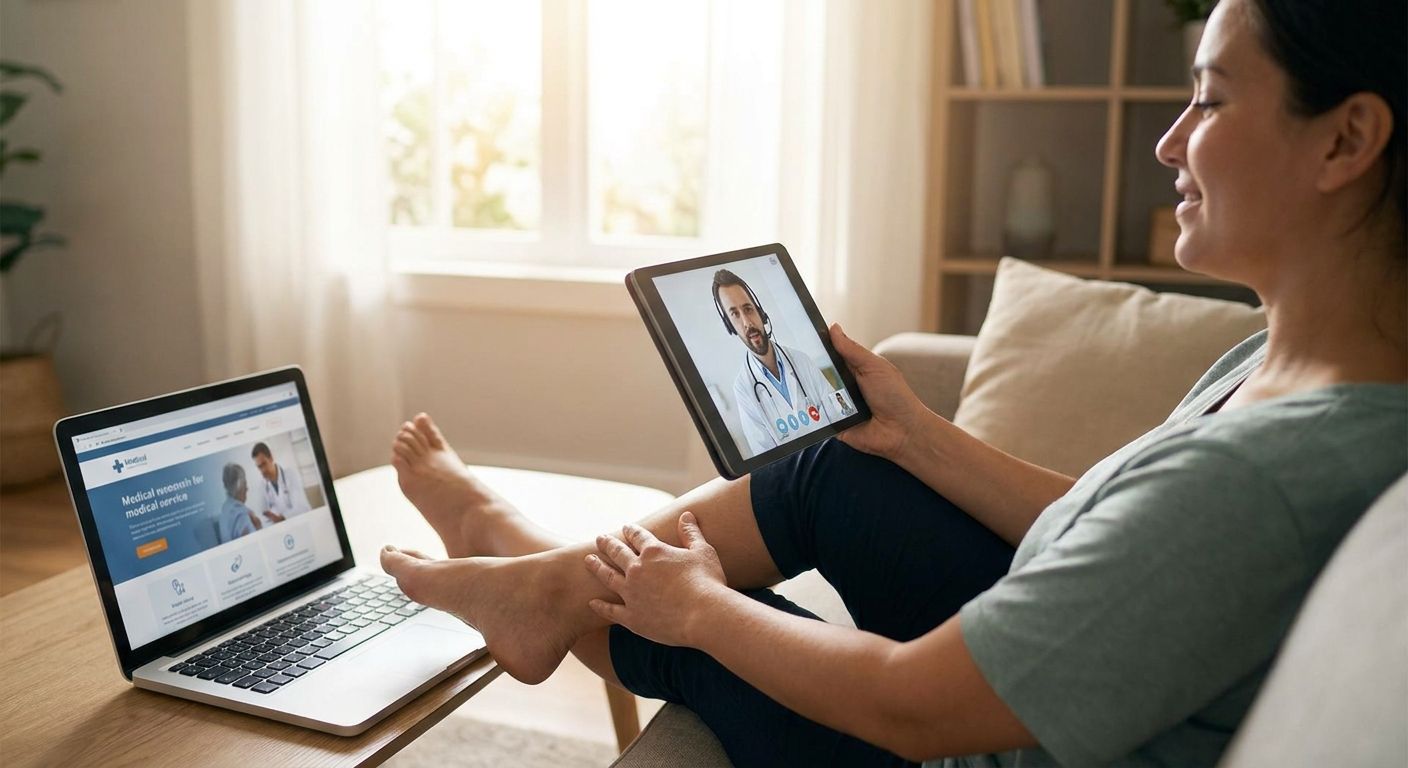
Restless leg syndrome telehealth connects you with a licensed clinician online to check the usual drivers behind nighttime leg discomfort — low iron, diabetes-related nerve irritation, certain medications, and sleep disruption — before you're routed to an in-person neurologist. For most people, that first pass online is enough to identify a fixable cause and start a plan.
- Restless leg syndrome telehealth screens for iron deficiency, diabetes, and medication triggers before a neurology referral.
- Low ferritin (under 75 ng/mL) is linked to worse RLS symptoms and is fixable with iron correction.
- Antihistamine sleep aids like diphenhydramine commonly make restless legs syndrome worse, not better.
- See a neurologist in person if leg jerking happens nightly despite correcting iron and adjusting medications.
- Telehealth works best for RLS tied to a correctable cause, not for treatment-resistant or severe cases.
Why this matters
Restless legs syndrome (RLS) is a neurological condition that causes an urge to move the legs, usually worse at rest and in the evening. An estimated 7-10% of US adults report symptoms, and a meaningful share of those cases trace back to something a blood test can catch: low iron stores.
Most people don't start with a neurologist. They start by Googling their symptoms at 11 p.m. after another night of kicking the sheets. A telehealth visit is the fastest way to rule in or rule out the common, fixable causes before booking a specialist you may not need. NowCare's online prescription refill for iron and vitamin deficiency supplements exists for exactly this pattern — confirmed low iron, treated without an office visit.
Why restless leg syndrome telehealth matters for people managing nightly symptoms
RLS symptoms are hard to describe to a doctor in a 15-minute in-office slot, and they rarely show up during the appointment itself. Telehealth changes that dynamic: you can log symptoms for two weeks, share the pattern in a written intake, and get a clinician's read without waking up at 2 a.m. to demonstrate the problem in a waiting room.
The segment that benefits most from restless leg syndrome telehealth in 2026 has three traits: symptoms are new or worsening, no formal diagnosis exists yet, and there's no red-flag sign (leg swelling, one-sided weakness, chest pain) that needs an ER instead. If that's you, the online path below is the right starting point.
Log your symptom pattern for two weeks before any visit
A clinician can't act on "my legs feel weird sometimes." Specifics change the visit from guesswork to a plan.
- Note the time of night symptoms start and how long they last
- Track what you ate, drank, or took that day (caffeine, alcohol, antihistamines)
- Rate the urge to move on a 1-10 scale each night
- Record whether movement actually relieves the sensation
- Note any family history of RLS — it runs in families more often than people assume
Get your ferritin and iron levels checked
Low iron stores are one of the most common, correctable drivers of RLS, and it's a blood draw, not a scan.
- Ask for a ferritin test specifically, not just standard iron panels
- A ferritin level under 75 ng/mL is the threshold most neurology guidelines flag as worth treating for RLS
- Mention any history of heavy periods, blood donation, or low-iron diets
- If levels come back low, NowCare's online prescription refill for iron and vitamin deficiency supplements can get treatment started without a separate office visit
- Recheck ferritin again after 3 months of supplementation — correction is gradual, not immediate
Review every medication and supplement you take
Some of the most common cabinet items make RLS worse, not better.
- Diphenhydramine (found in most "PM" pain relievers and allergy pills) is a known RLS trigger
- Certain antidepressants (SSRIs, SNRIs) can aggravate symptoms
- Anti-nausea medications with dopamine-blocking effects are a common culprit
- Bring a full list, including anything over-the-counter, to your telehealth visit
- Never stop a prescribed medication without checking with the clinician who prescribed it first
Rule out a diabetes or nerve-related connection
RLS and diabetic peripheral neuropathy can overlap, and treating one without checking the other leaves symptoms half-solved.
- Ask about a recent A1C if you haven't had one in the past year
- Describe whether symptoms include numbness or tingling, not just the urge to move
- Flag any history of prediabetes or metabolic syndrome
- If diabetes is a factor, telehealth for diabetes management covers the ongoing monitoring RLS treatment alone won't address
- Foot numbness alongside leg restlessness is a signal worth mentioning specifically — it changes the differential
Fix the sleep routine RLS is wrecking
RLS and poor sleep feed each other — fatigue makes symptoms worse, and symptoms make sleep worse.
- Cut caffeine after early afternoon, not just before bed
- Keep a consistent sleep and wake time, even on weekends
- Add light stretching or a short walk before bed rather than sitting still for hours
- Avoid alcohol in the evening — it's a common overlooked trigger
- If sleep problems persist independent of RLS, telehealth for insomnia and sleep issues is worth a separate visit
Book the virtual visit and get a plan in writing
Once symptoms are logged and labs are ordered or back, the visit itself is short.
- Bring your two-week symptom log and full medication list
- Ask directly whether iron correction, a medication swap, or a specialist referral fits your case
- Get discharge instructions in writing, including when to follow up
- Ask what a worsening symptom pattern would look like, so you know when to escalate
- Confirm the provider is licensed in your state before the visit starts
Set a follow-up cadence, don't wait for a crisis
RLS tends to wax and wane, which tricks people into skipping follow-up once symptoms ease.
- Recheck ferritin at 3 months if iron correction was the plan
- Reassess symptom frequency at 6 weeks after any medication change
- Revisit sleep habits if symptoms return during high-stress periods
- Keep the symptom log going even after improvement — patterns matter over months, not one good week
“If an antihistamine sleep aid is part of your nightly routine, that is often the fastest thing to test and remove first.”
Comparing your options for restless leg syndrome care
| Option | Best for | Key limitation |
|---|---|---|
| Virtual urgent care telehealth visit | Initial evaluation of iron, medications, and sleep triggers | Not a substitute for neurology referral in severe or treatment-resistant cases |
| In-person neurologist | Confirmed diagnosis, treatment-resistant symptoms, or abnormal nerve findings | Longer wait times and requires travel |
| Iron/vitamin deficiency telehealth refill | Confirmed low ferritin driving symptoms | Only helps if deficiency is the actual cause |
| Sleep specialist referral | RLS symptoms tied to sleep apnea or major insomnia | Usually requires a formal sleep study first |
| Self-directed lifestyle changes | Mild, occasional symptoms with no red flags | Doesn't address an underlying deficiency or nerve condition |
Start with a virtual visit
Get iron, medication, and sleep triggers checked before booking a specialist.
Common mistakes people make with restless leg syndrome
- Assuming it's "just restless legs" and skipping the ferritin test — low iron is one of the most fixable causes and gets ignored constantly.
- Self-treating with nighttime allergy pills — diphenhydramine is in nearly every "PM" formula and is a documented RLS trigger.
- Not tracking triggers before the visit — a vague symptom description gets a vague treatment plan.
- Waiting months to check for diabetes involvement — RLS and diabetic neuropathy overlap more than most patients realize.
- Dropping follow-up once symptoms ease — RLS fluctuates, and stopping treatment early is the most common reason it comes back.
Before your first telehealth visit for any of this, how to prepare for your first telehealth appointment covers what to have ready so the visit isn't wasted on logistics.
FAQ
What is restless leg syndrome telehealth?
Restless leg syndrome telehealth is an online visit with a licensed clinician to review symptoms, order labs like ferritin, and check for medication or diabetes-related triggers. It's a starting point, not a replacement for a neurologist in complex cases.
Can a telehealth doctor diagnose restless leg syndrome?
A telehealth clinician can evaluate symptoms, review history, and order labs, but a formal RLS diagnosis often follows established clinical criteria a provider walks through during the visit. Severe or ambiguous cases still get referred to a neurologist or sleep specialist.
Is restless leg syndrome linked to iron deficiency?
Yes — low ferritin, generally under 75 ng/mL by American Academy of Neurology guidance, is one of the most common correctable causes of RLS. Correcting iron levels often reduces symptom severity within a few months.
Can telehealth treat restless leg syndrome caused by diabetes?
Telehealth can identify the diabetes connection and coordinate ongoing management, since diabetic neuropathy and RLS symptoms overlap. Blood sugar control is part of managing the leg symptoms, not a separate, unrelated issue.
What lifestyle changes help restless leg syndrome?
Cutting evening caffeine and alcohol, keeping a consistent sleep schedule, and adding light activity before bed are the most commonly recommended first steps. These don't replace treatment for an underlying cause like iron deficiency, but they reduce symptom frequency.
Does an online doctor visit cost less than an in-person neurologist for restless legs?
Costs vary by provider, plan, and whether labs or a specialist referral are needed, so check current pricing directly with the telehealth platform you choose. A telehealth visit is generally a lower-cost first step than a specialist appointment.
Is restless leg syndrome telehealth covered by insurance?
Coverage depends on your specific insurance plan and the platform you use — some telehealth visits are billed to insurance and others are self-pay. Confirm coverage details before booking if cost is a deciding factor.
When should I see a specialist instead of using telehealth for restless legs?
See a neurologist directly if symptoms happen nightly despite correcting iron and adjusting medications, or if you have numbness, weakness, or symptoms in other body parts. Telehealth works best as the first step, not the last one, for symptoms that don't resolve with basic correction.
One last thing
The detail most people miss: an antihistamine sitting in a nightstand drawer is often doing more to cause restless legs than anything happening in the legs themselves. Diphenhydramine — the active ingredient in most nighttime allergy and pain-relief combos — is a well-documented RLS trigger, and swapping it out is free. Try that before assuming 2026 means another year of kicked-off blankets and 2 a.m. pacing.


