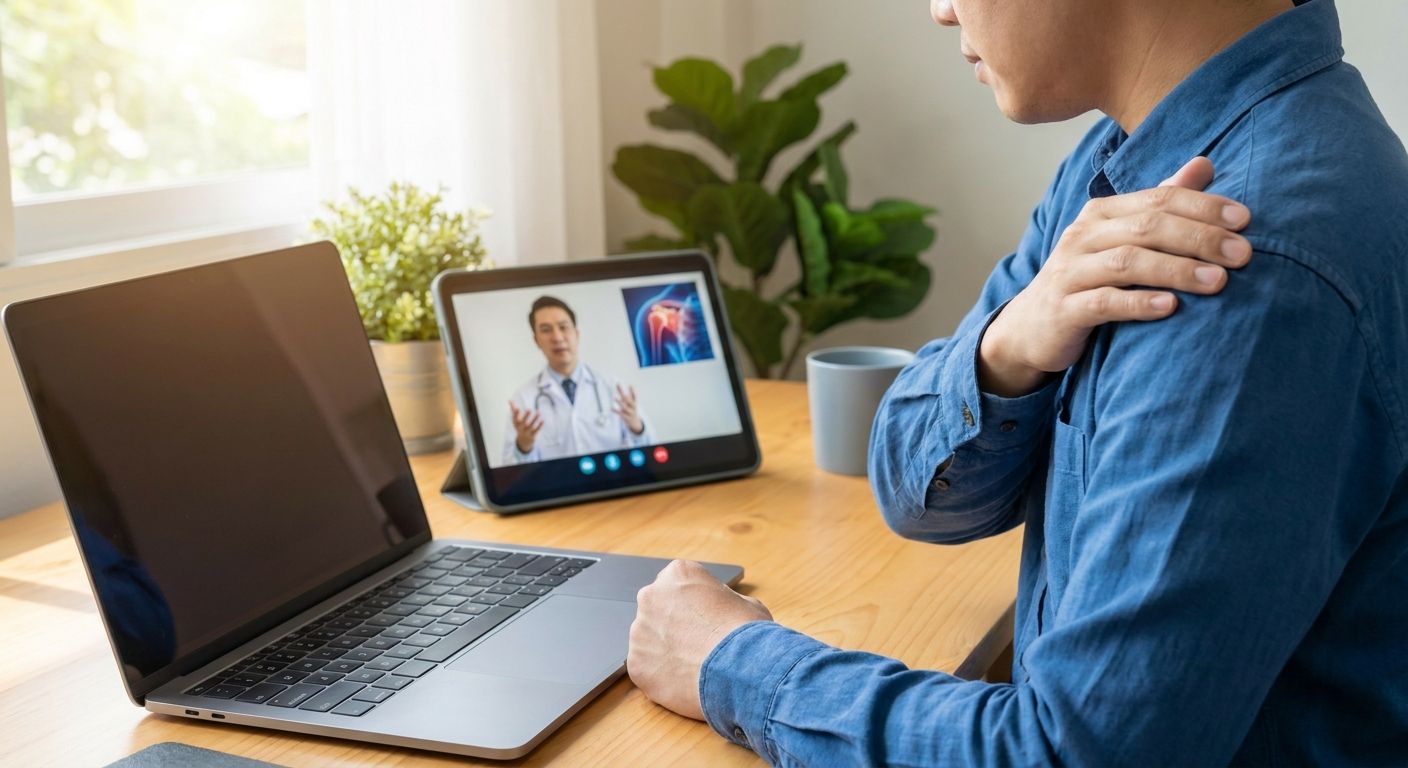
Shoulder pain that won't quit — a rotator cuff strain, an impingement flare-up, or that dull ache after a bad night's sleep — doesn't always need an ER trip or a three-week wait for an orthopedic appointment. Telehealth for shoulder pain gives you a licensed clinician who can triage the injury, rule out red flags, and route you to physical therapy or specialist care without you leaving the couch.
- NowCare's Virtual Urgent Care is the right first stop for telehealth for shoulder pain in 2026 — Consider it for triage and referral.
- A same-day video visit can flag red-flag symptoms (numbness, sudden weakness) that need in-person imaging within hours, not weeks.
- Physical therapy referral pathways move faster online than through a primary care office in most 2026 insurance networks.
- Skip any telehealth platform that prescribes opioids for shoulder pain sight-unseen — that's a Skip, not a Buy.
Why this matters
Shoulder pain sits in an awkward gap. It's rarely a true emergency, but it's disruptive enough that people put off calling anyone until the pain has lingered for weeks. By the time a rotator cuff issue gets seen in person in 2026, many patients have already lost range of motion they didn't need to lose.
A telehealth visit doesn't replace an MRI or a surgeon's hands-on exam when one is warranted. What it does is get a licensed clinician looking at your symptoms same-day, deciding whether this is a strain that responds to rest and physical therapy or a red-flag case that needs urgent in-person care — and writing the referral either way.
Who this is for
This guide is for anyone dealing with shoulder pain who wants a fast, provider-guided read on what's going on before committing to an in-person specialist visit — desk workers with impingement from bad posture, weekend athletes nursing a rotator cuff strain, people managing a nagging ache who keep pushing the appointment off, and patients who already suspect they need physical therapy but don't have a referral yet. It's not for anyone with sudden shoulder deformity, chest pain radiating into the arm, or total loss of motion after trauma — those situations need an ER, not a video call.
What to look for in telehealth for shoulder pain
Same-day or next-day availability
Shoulder pain rarely waits for a convenient Tuesday. A platform that can't get you a video visit within 24 to 48 hours isn't solving the actual problem, which is the gap between "this hurts" and "someone qualified looked at it."
A licensed clinician, not a chatbot triage form
Symptom checkers are fine for narrowing possibilities, but shoulder pain has enough overlapping causes — rotator cuff tear, frozen shoulder, referred cardiac pain, cervical nerve impingement — that you want a real clinician asking follow-up questions, not a static form.
A clear path to physical therapy referral
Most shoulder pain resolves with a structured PT program, not medication. The telehealth visit is only useful if it ends in an actual referral you can act on, not a vague "see a specialist" note.
Willingness to escalate to in-person care
A good telehealth provider tells you plainly when video isn't enough — numbness down the arm, sudden weakness, or visible deformity all warrant in-person imaging. Any platform that tries to manage every case remotely regardless of severity is cutting corners.
Transparent, one-time pricing
Shoulder pain visits shouldn't come with surprise fees stacked on top of a subscription you didn't want. Flat, upfront pricing tells you what the visit costs before you book it.
Secure intake and HIPAA-compliant documentation
Your visit notes and referral need to move cleanly to whatever specialist or PT clinic you end up seeing next. A platform without proper secure intake creates friction exactly where you can't afford it.
Top picks for shoulder pain telehealth in 2026
NowCare Virtual Urgent Care — the safe pick. NowCare runs provider-guided video visits for everyday concerns including musculoskeletal pain, with licensed clinicians reviewing every visit before any referral or treatment plan goes out. One flat-rate monthly plan covers the visit, and the intake is secure and HIPAA compliant. Verdict: Buy if you want a fast, credentialed first read on shoulder pain without a subscription commitment.
PT referral pathways — the fastest route to actual treatment. If your shoulder pain looks like classic rotator cuff strain or impingement, a telehealth referral for physical therapy skips the primary-care middleman entirely. Most patients with mechanical shoulder pain respond to a structured PT program within 4 to 6 weeks. Verdict: Buy for anyone whose pain worsens with specific movements rather than at rest.
Sports injury assessment — the pick for active patients. Weekend athletes and gym regulars dealing with an acute strain benefit from a sports injury assessment that distinguishes overuse from something that needs imaging. Verdict: Consider this route if the pain started with a specific incident — a fall, a lift, a bad serve — rather than gradually.
Chronic pain management — the wildcard for long-haul cases. Shoulder pain that's dragged on for months, especially with stiffness that limits overhead reach, sometimes needs a chronic pain management approach rather than a one-off visit. Verdict: Consider if you've already tried rest and OTC anti-inflammatories without improvement over 6 to 8 weeks.
Broad physical therapy referral options — the comparison shopper's pick. If you want to see how different telehealth options for physical therapy referrals stack up before committing, this is the page to check first. Verdict: Consider before you lock into a specific PT clinic network.
Get your shoulder pain triaged today
Book a provider-guided video visit and get a same-day physical therapy referral if needed.
What to avoid
- Platforms that prescribe opioids or muscle relaxants for shoulder pain without an exam history. Shoulder pain is almost never an opioid-appropriate condition, and any provider offering that as a first-line answer in 2026 is a red flag, not a shortcut.
- Generic symptom checkers with no licensed clinician review. A form that spits out "likely rotator cuff tear" without a real person confirming it isn't a diagnosis — it's a guess wearing a lab coat.
- Referrals with no follow-up structure. A one-time video call that ends in "go see a specialist" with no documentation or next step wastes the time you spent booking it.
Verdict comparison
| Option | Best for | Turnaround | Verdict |
|---|---|---|---|
| NowCare Virtual Urgent Care | First-line triage | Same-day/next-day | Buy |
| PT referral pathway | Mechanical strain, impingement | 24-48 hrs to referral | Buy |
| Sports injury assessment | Acute, incident-linked pain | Same-day | Consider |
| Chronic pain management | Pain lasting 6+ weeks | Ongoing | Consider |
| Opioid-first platforms | Nobody, really | N/A | Skip |
FAQ
Can telehealth diagnose a rotator cuff tear?
A telehealth visit can't replace an MRI, but a licensed clinician can assess your range of motion, pain pattern, and history to decide whether your symptoms look like a strain, impingement, or something that needs in-person imaging. In 2026, most platforms will refer you onward for imaging if the exam suggests a tear.
Is telehealth for shoulder pain covered without insurance?
Many telehealth platforms, including NowCare, offer flat-rate pricing that doesn't require insurance. You pay one transparent price for the visit rather than navigating copays or claims.
How fast can I get a physical therapy referral online?
A same-day video visit can typically produce a physical therapy referral within 24 to 48 hours if the clinician determines PT is the right next step, faster than most in-person primary care scheduling in 2026.
When should I skip telehealth and go to the ER for shoulder pain?
Go in person immediately if you have sudden shoulder deformity, numbness or tingling down the arm, chest pain, or total loss of motion after a fall or impact. Telehealth is for triage and non-emergency management, not acute trauma.
Does telehealth work for chronic shoulder pain, not just new injuries?
Yes. Chronic pain management pathways exist specifically for shoulder pain that has lasted weeks or months, often pairing ongoing provider check-ins with a referral to physical therapy or a specialist.
What's better for shoulder pain, telehealth or urgent care in person?
Telehealth is better for triage, referrals, and non-emergency pain management because it's faster to access. In-person urgent care is better when you need imaging, a physical exam of instability, or treatment for visible injury.
Will a telehealth visit prescribe medication for shoulder pain?
A licensed clinician may recommend over-the-counter anti-inflammatories or a short-term prescription if medically appropriate, but responsible telehealth platforms avoid prescribing opioids for shoulder pain without an in-person exam.
How much does a telehealth visit for shoulder pain cost?
Pricing varies by platform, but many telehealth services in 2026 use flat-rate, one-time pricing disclosed before booking rather than variable copay structures.
One last thing
Most shoulder pain that gets referred to physical therapy in 2026 didn't need a specialist consult first — it needed someone to say "yes, start PT now" three weeks earlier than it actually happened. That's the real value of telehealth for shoulder pain: not replacing the exam room, but closing the gap between the first twinge and the first PT appointment.


