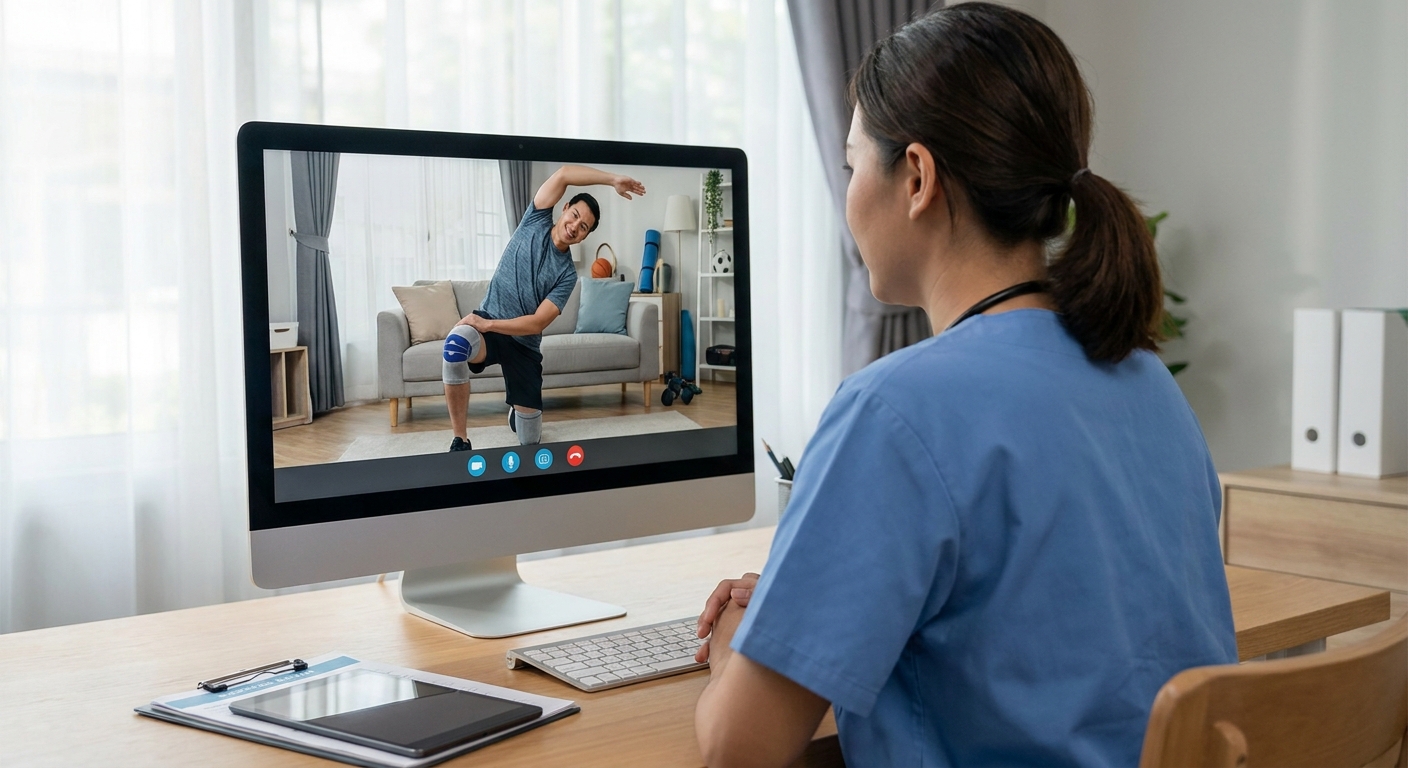
Telehealth for sports injury assessment gets you in front of a licensed clinician within hours instead of days, triaging ankle sprains, stress fractures, and Achilles flare-ups before a minor tweak turns into a six-week sideline.
- Telehealth sports injury assessment triages ankle sprains and overuse injuries fast in 2026 — same-day video visits are the strongest pick, Buy.
- Nowcare's licensed clinicians run provider-guided video visits for foot and ankle symptoms, not a substitute for emergency imaging.
- Skip symptom-checker apps for a suspected fracture; they cannot palpate swelling or read an X-ray.
- Post-injury and post-surgery follow-up visits over video cut return trips for stable recovery cases.
Why this matters
An ankle sprain that gets assessed within 24 hours heals differently than one nursed with ice and guesswork for a week. The clinical question is not whether you can walk on it today — it is whether swelling, bruising pattern, and point tenderness point to a sprain you can manage or a fracture that needs imaging.
Nowcare connects patients with licensed clinicians for provider-guided foot and ankle care, organized around what the brand calls the Seven Pillars of Foot & Ankle Health. A sports injury assessment over video works the same way a podiatry visit works for heel pain or nail health: a clinician reviews your symptoms, screens for red flags, and tells you plainly whether you need in-person imaging or can manage the injury from home.
2026 is the year telehealth sports injury assessment stopped being a fallback and became the first call for a lot of active people — faster than urgent care, cheaper than an ER copay, and specific enough to catch what a generic nurse line misses.
Who this is for
This is for the weekend runner who rolled an ankle on a trail run, the parent of a youth soccer player limping off the field, and the recreational athlete nursing a stress fracture they are hoping is not one. It is for anyone who wants a same-day clinical opinion on a foot or ankle injury without burning a half-day on an urgent care waiting room in 2026.
It is not for anyone with an obvious deformity, uncontrolled bleeding, or total inability to bear weight — that is an in-person or ER visit, full stop.
What to look for in telehealth for sports injury assessment
Same-day video availability
An injury assessment loses value if you are waiting three days for a slot. Swelling patterns and bruising shift fast, and a same-day visit lets the clinician see the injury closer to when it happened, which matters for an accurate read.
Licensed, specialty-matched clinicians
A general nurse line can tell you to rest and ice. A licensed clinician with foot and ankle training can tell you whether that lateral ankle pain is a grade 1 sprain or something that needs an X-ray. For sports injuries below the knee, specialty match changes the quality of the advice.
Clear red-flag screening
The visit should open with direct questions: can you bear weight, is there numbness or tingling, is there visible deformity. These questions decide whether telehealth is even appropriate for this injury, and a platform that skips them is not doing the assessment right.
A path to imaging or in-person referral
Some injuries need an X-ray or MRI no camera can substitute for. The right service tells you that plainly and routes you to imaging instead of stringing you along with a video-only plan that does not fit a possible fracture.
Follow-up built into the recovery
A sprain or stress fracture is not a one-visit problem. Look for a service that checks back in at the two-week and six-week marks, not one that treats the first video call as the whole relationship.
Cost and insurance clarity before booking
Know what the visit costs and whether it is billed to insurance before you are on camera. Surprise billing after an injury assessment is the fastest way to sour someone on telehealth for sports injury use going forward.
Top picks
The same-day sprint. For an ankle rolled this morning or a hot, swollen big toe after a sprint session, same-day video capacity is the whole point. Best telehealth platforms for same-day appointments matters here because a 48-hour wait defeats the purpose of an acute injury check. Look for confirmed same-day slots, not vague within-24-hours language. Buy if you need eyes on an injury today.
The booking shortcut. If you have never done a video visit and just want the fastest path from symptom to screen, how to book an urgent care video visit walks the intake in a few minutes flat — insurance card, symptom description, camera check. Consider it your on-ramp if the intake form is what is stopping you from booking.
The overuse-injury track. Plantar fasciitis flaring after a marathon block, Achilles tightness that will not quit, shin splints that showed up in week three of a new running program — these build over weeks, not minutes, and a video visit can map a modification plan and decide if imaging is warranted. Buy for anything that has been nagging for more than 10 days without improving.
The specialist-referral track. For an athlete managing diabetes or neuropathy alongside a foot injury, the assessment needs to weigh healing risk differently than it would for a healthy 22-year-old. A clinician trained in diabetic foot health will flag that distinction where a generic urgent care line will not. Consider this path if you have an underlying condition that changes how an injury should heal.
Get a same-day injury assessment
Talk to a licensed clinician about a foot or ankle injury today.
What to avoid
- Generic symptom-checker chatbots for anything that looks like a fracture — they cannot palpate swelling, check for point tenderness, or order an X-ray, and a wrong reassurance here costs you weeks of healing.
- Multi-day intake queues for an acute sprain — by the time a non-urgent telehealth service gets back to you, the injury window for the most useful assessment has passed.
- Skipping the in-person exam when there is visible deformity, numbness, or total inability to bear weight — no camera substitutes for hands-on exam and imaging in those cases, in 2026 or any year.
How the picks compare
| Pick | Best for | Response time | Verdict |
|---|---|---|---|
| Same-day sprint | Fresh acute injury (sprain, hot swollen toe) | Same day | Buy |
| Booking shortcut | First-time telehealth users | Minutes to book | Consider |
| Overuse-injury track | Nagging pain over 10+ days | 24-48 hours | Buy |
| Specialist-referral track | Injury plus underlying condition | 24-48 hours | Consider |
FAQ
Is telehealth good for sports injury assessment?
Telehealth sports injury assessment works well for sprains, overuse injuries, and post-surgery follow-up in 2026, where a licensed clinician can screen symptoms and decide if imaging is needed. It is not a substitute for in-person care when there is visible deformity, numbness, or inability to bear weight at all.
Can a telehealth visit diagnose a stress fracture?
A video visit can screen for stress fracture symptoms and history but cannot confirm one without imaging. The clinician's job on the call is to decide whether your symptoms warrant an X-ray referral, not to replace the scan itself.
How fast can I get a telehealth visit for an ankle sprain?
Same-day video visits are standard on platforms built for acute injury triage in 2026. The sooner you are seen after the injury, the more accurate the swelling and bruising read tends to be.
Do telehealth clinicians handle foot and ankle injuries specifically?
Licensed clinicians with foot and ankle training give a more specific read on sports injuries below the knee than a general urgent care line. Ask directly whether the visit is staffed by a podiatry-trained clinician before booking.
What injuries should skip telehealth entirely?
Visible deformity, uncontrolled bleeding, complete inability to bear weight, and numbness or tingling all warrant an in-person or emergency visit instead of a video call. A camera cannot replace hands-on exam or immediate imaging for those signs.
Does telehealth cover follow-up after a sports injury?
A properly built telehealth track includes follow-up checks at roughly two weeks and six weeks after the injury, not just the first assessment call. That follow-up is what catches a sprain that is not healing on schedule.
Is telehealth cheaper than an urgent care visit for a sports injury?
Video visits typically run lower than an urgent care copay for a straightforward assessment, though pricing and insurance coverage vary by platform and plan in 2026. Confirm cost before the visit, not after.
One last thing
The injury that gets misjudged most often on video is not the dramatic ankle roll — it is the stress fracture that has been called a sprain for three weeks because nobody screened for point tenderness on a specific bone versus the surrounding tissue. Ask directly whether the clinician checked bone tenderness, not just soft-tissue swelling, before you accept a sprain diagnosis over video in 2026.


