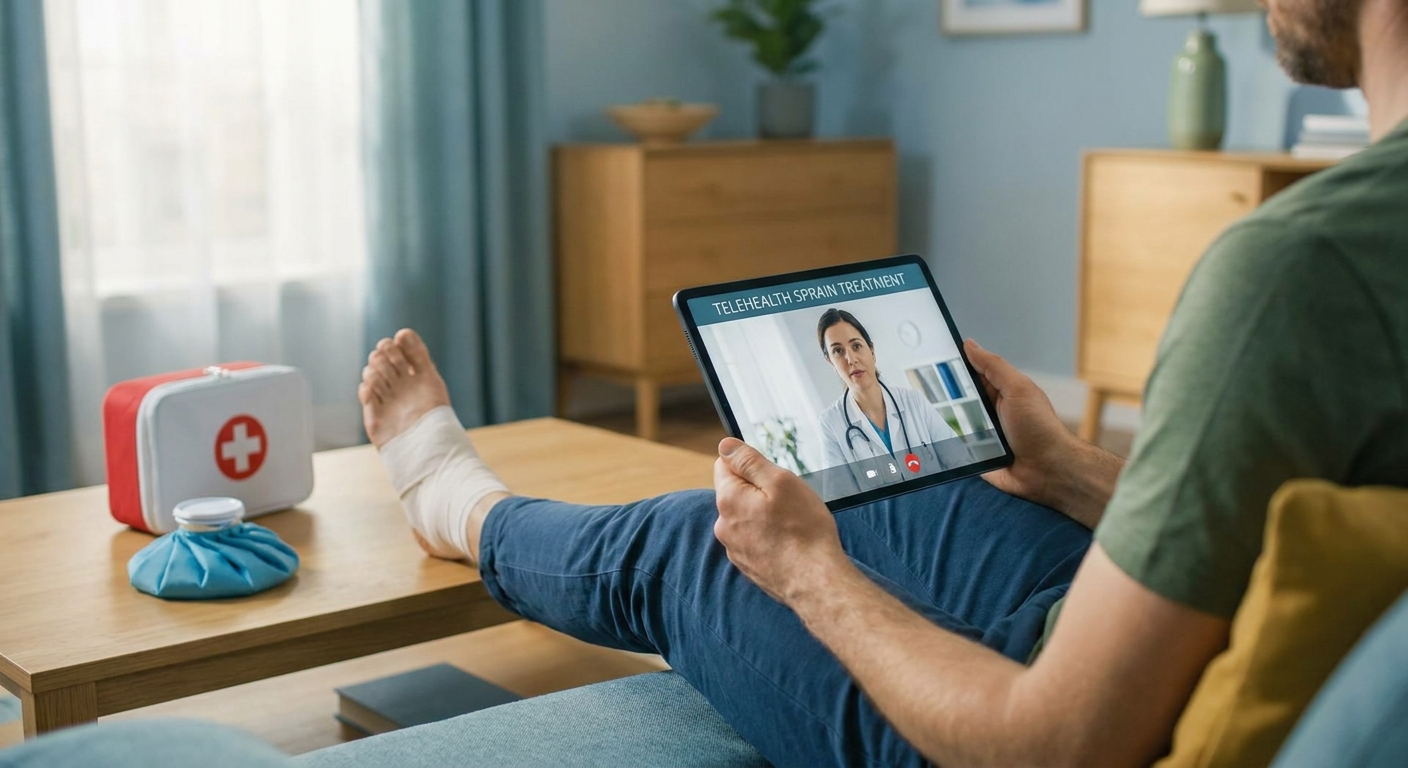
A twisted ankle at 9 PM does not need a four-hour ER wait — it needs a licensed clinician who can grade the sprain, rule out a fracture, and build a recovery plan over video, right now, in 2026.
- Telehealth sprain treatment works for grade 1 and grade 2 ankle sprains — a live video exam catches most soft-tissue injuries without an ER trip.
- Skip chat-only triage apps that can't grade ligament damage; a real clinician exam plus imaging referral is the baseline.
- RICE (rest, ice, compression, elevation) still governs the first 48-72 hours no matter which platform books the visit.
- Workers' comp sprains need documented evaluation, not a generic sick-visit note.
- NowCare's sports injury assessment is the direct-hit pick for a fresh sprain; the podiatry follow-up path covers lingering pain past six weeks.
Why this matters
Ankle sprains are one of the most common reasons people show up at an ER or urgent care clinic for something that didn't need either. Orthopedic literature commonly cites roughly 2 million ankle sprains treated annually in the US, and the majority are grade 1 or grade 2 — swelling, bruising, pain on weight-bearing, but no deformity and no numbness.
Those injuries follow a predictable timeline: grade 1 sprains typically resolve in 1-2 weeks, grade 2 in 3-6 weeks, grade 3 in 8-12 weeks with more aggressive rehab. A clinician who can see the injury on video, ask the right screening questions, and confirm there's no fracture risk can get you moving through that timeline faster than a same-day urgent care slot that may not exist.
The catch: not every telehealth visit is built for this. A chatbot that hands you a generic "rest and ice" PDF is not the same as a licensed clinician grading the injury and deciding whether you need an X-ray, a brace, or a referral. That distinction is the whole game in 2026.
Who this is for
This guide is for anyone who rolled an ankle on a run, twisted a wrist in a fall, or strained a knee playing weekend sports and is trying to figure out whether they need to drive to urgent care or can handle it from the couch. It's also for parents managing a kid's playground tumble, and for anyone hurt on the job who needs a documented evaluation for a claim. If there's visible deformity, numbness, inability to bear any weight, or the injury happened with a high-impact fall, skip telehealth and go to urgent care or the ER — NowCare and every legitimate platform will tell you the same thing before booking a video visit.
What to look for in telehealth sprain treatment
A live video exam, not just a chat form
A sprain needs eyes on it — swelling pattern, range of motion, weight-bearing test. Any platform that resolves the visit through a text questionnaire alone is skipping the part that actually determines the grade of the injury.
Standardized sprain grading and red-flag screening
The clinician should walk through grade 1-3 criteria and specifically screen for fracture indicators — point tenderness over bone, inability to take four steps, visible deformity. This is the Ottawa Ankle Rules logic in practice, and it's what separates a real exam from a guess.
An imaging referral pathway
If the exam raises fracture concern, the platform needs a clear next step: an order or referral for an X-ray, not a vague "go get it checked out." A provider-guided model means the clinician owns that handoff.
RICE and bracing guidance built into the visit
The first 48-72 hours matter more than anything after. A good telehealth sprain visit ends with specific instructions — icing intervals, compression wrap technique, when to start weight-bearing — not a one-line summary.
Follow-up scheduling for reassessment
Sprains that aren't improving by day 10-14 need a second look. Platforms that make rebooking a follow-up easy (rather than starting a brand-new intake) save you time and catch slow-healing injuries earlier.
Documentation for work, school, or a claim
If the sprain happened on the job or keeps you off your feet at work, you need a note that holds up. This is where a general sick-visit platform falls short and a workers' comp-specific evaluation path matters.
Book a sprain assessment today
Get a licensed clinician's exam and recovery plan over video.
Top picks for telehealth sprain treatment
NowCare Sports Injury Assessment — the direct hit
This is built for exactly the scenario most people land on this page for: a fresh ankle, knee, or wrist sprain from sports or daily activity. The visit includes a live exam, grading, and a same-visit decision on imaging referral. One spec that matters: the visit is structured around weight-bearing and range-of-motion testing, not a generic symptom checklist. If you rolled it in the last 48 hours, this is where to start. Verdict: Buy.
Urgent Care Video Visit — the fastest door in
This is the right pick when you're not sure yet whether the injury is minor or needs an ER. It runs red-flag screening first — deformity, numbness, inability to bear weight — before deciding whether a sprain-specific visit even applies. It's the triage step, not the treatment plan. Verdict: Buy for screening, then route to a sprain-specific visit.
Telehealth for Back Pain and PT Referral — the rehab bridge
Sprains that need structured rehab (grade 2 and up, or anything not improving after two weeks) benefit from a formal physical therapy referral rather than a one-time video call. This pathway exists for exactly that handoff — clinician evaluation followed by a PT referral instead of another intake form. Verdict: Consider once the acute swelling has settled.
Workers' Comp Injury Evaluation — the paperwork pick
A sprain that happened on the clock needs documentation that satisfies a claims process, not a same-day sick note. This pathway is built around that specific evaluation and paperwork trail. Skip it if the injury didn't happen at work — it's overkill and won't speed anything up. Verdict: Consider if you're filing a claim.
NowCare's Podiatry Follow-Up — the recheck
Ankle sprains that still hurt six or more weeks out are no longer a fresh-injury problem — they're a foot-and-ankle problem, and that's NowCare's core lane. A follow-up consult with a licensed clinician can catch chronic instability, tendon involvement, or a missed fracture that never got imaged. Verdict: Buy if pain persists past six weeks.
What to avoid
- Chat-only triage with no video exam. It can't grade a sprain or spot swelling patterns that matter for the diagnosis — you'll get a generic answer regardless of severity.
- Platforms with no imaging referral pathway. If a clinician suspects a fracture and has no way to order an X-ray, you're stuck restarting the process somewhere else.
- General urgent care visits for a workers' comp injury. The documentation format is different, and a mismatched note can delay a claim by weeks.
Comparison at a glance
| Pathway | Best for | Includes imaging referral | Verdict |
|---|---|---|---|
| NowCare Sports Injury Assessment | Fresh sprain, 0-48 hours | Yes | Buy |
| Urgent Care Video Visit | Unsure if it's serious | Screening only | Buy for triage |
| Back Pain & PT Referral | Needs structured rehab | No, refers to PT | Consider |
| Workers' Comp Evaluation | On-the-job injury, claim needed | Yes | Consider |
| Podiatry Follow-Up | Pain lasting 6+ weeks | Yes | Buy if chronic |
FAQ
Can you get telehealth sprain treatment for an ankle sprain in 2026?
Yes — a licensed clinician can grade a grade 1 or grade 2 ankle sprain over video, confirm there's no fracture risk, and issue an imaging referral if needed. Grade 3 sprains with deformity still need in-person care.
Is telehealth sprain treatment as good as an urgent care visit?
For most soft-tissue sprains, yes, because the exam relies on visible swelling, weight-bearing tests, and symptom history rather than hands-on palpation. Fractures or injuries with numbness still require in-person imaging.
How long does an ankle sprain take to heal?
A grade 1 sprain heals in 1-2 weeks, a grade 2 sprain in 3-6 weeks, and a grade 3 sprain in 8-12 weeks. A telehealth follow-up visit is useful if pain hasn't improved by the two-week mark.
What is RICE and does it still apply in 2026?
RICE stands for rest, ice, compression, and elevation, and it's still the standard first-48-72-hour protocol for a fresh sprain. A telehealth clinician will walk through the specifics for icing intervals and weight-bearing timing.
Can a telehealth visit document a workplace sprain for workers' comp?
Yes, but you need a pathway built for that specific documentation, not a general sick-visit note. A workers' comp injury evaluation is structured around the paperwork a claim requires.
When should you skip telehealth and go to the ER for a sprain?
Skip telehealth if there's visible deformity, numbness, inability to take four steps, or the injury came from a high-impact fall. Those are fracture red flags that need in-person imaging immediately.
Does telehealth sprain treatment include a brace or imaging order?
A licensed clinician can recommend bracing and, if fracture risk is suspected, refer you for an X-ray. Platforms without an imaging referral pathway can't complete that second step.
One last thing
Most people wait too long to book the follow-up. A sprain that's still swollen and unstable at week three isn't "still healing" — it's a sign the ligament needs a structured plan, and a podiatry-focused recheck catches that faster than another round of rest and ice.


