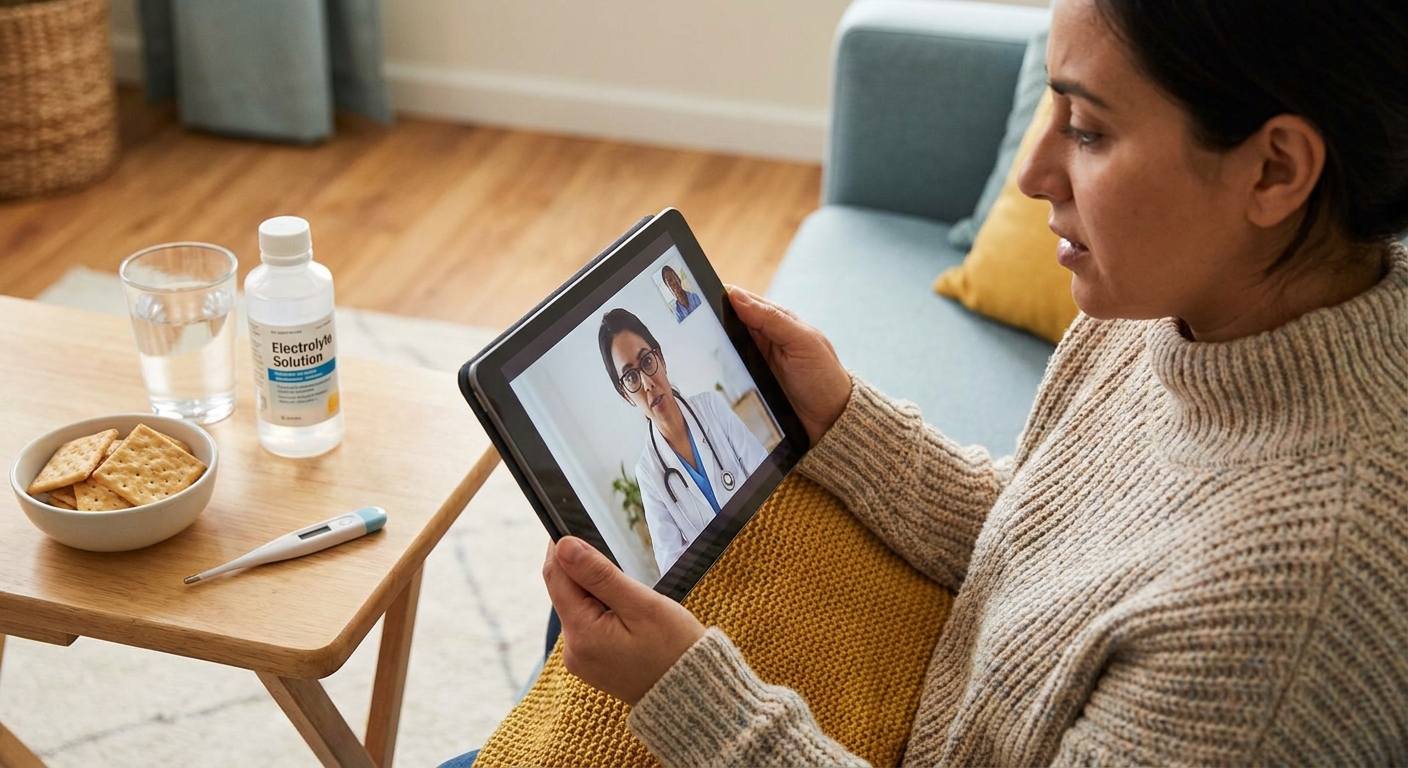
Stomach bugs and food poisoning rarely wait for business hours, and most cases don't need an ER trip — they need a clinician who can triage symptoms, rule out red flags, and prescribe relief within the hour.
- Telehealth food poisoning visits work for mild-to-moderate cases: nausea, vomiting, watery diarrhea, low fever.
- NowCare's same-day sick visit path gets most patients connected to a clinician in under 30 minutes.
- Blood in stool, fever over 102.5F, or signs of severe dehydration mean skip video and go to urgent care or the ER.
- Anti-nausea and anti-diarrheal prescriptions can be issued the same day when medically appropriate.
- Verdict: telehealth food poisoning care is a Buy for mild cases, a Skip for high-risk red-flag symptoms.
Who this is for
This guide is for anyone hit with sudden nausea, cramping, or diarrhea who wants a clinician's read before deciding whether to tough it out, book an in-person visit, or head to urgent care. It's built for the person googling symptoms at 11pm, the parent watching a kid who won't keep water down, and the traveler who ate something questionable on day two of a trip. It is not a substitute for emergency care when symptoms point to something more serious than a routine stomach bug.
Why this matters
The CDC's most recent estimate, updated in 2024, puts foodborne illness at roughly 48 million cases a year in the US — about 1 in 6 Americans. Most of those cases resolve in 24 to 72 hours without antibiotics, IV fluids, or an ER bed. The problem is that most people can't tell, in the moment, whether their symptoms fall into that ride-it-out category or the smaller slice that needs urgent evaluation.
That's the gap a same-day urgent care online appointment closes. A licensed clinician asks the right questions — duration, stool frequency, fever, blood, recent travel or food exposure — and either reassures you, prescribes something to manage symptoms, or tells you plainly to go get seen in person. In 2026, that triage call happens over video in minutes, not after a two-hour urgent care waiting room.
What to look for in telehealth for stomach bugs and food poisoning
Same-day availability, not next-week booking
A stomach bug that started this morning needs an answer today, not a slot three days out. Any platform worth using for this should offer same-day video visits as the default, not the exception.
Clear escalation rules
The clinician needs to tell you explicitly when video care stops being appropriate — blood in stool, fever above 102.5F, signs of dehydration like dizziness or no urination in 8 hours, or symptoms lasting more than 3 days. A platform that never escalates anyone is a red flag, not a convenience.
Prescribing authority for symptom relief
Most stomach bugs don't need antibiotics, but anti-nausea medication like ondansetron and rehydration guidance can shorten a miserable day significantly. Confirm the clinician can prescribe when appropriate, not just offer advice.
Pediatric and elderly protocols
Kids dehydrate faster than adults, and older adults with chronic conditions face higher complication risk from the same bug. Look for a platform with age-specific triage questions, not a one-size-fits-all script.
Follow-up if symptoms don't improve
A single video visit isn't the end of the relationship if symptoms worsen. Confirm there's a clear path back to a clinician within 24-48 hours without starting the intake process over.
Top picks for telehealth food poisoning care
The fast track — best telehealth services for same-day sick visits. The single number that matters here is speed to clinician: most same-day sick-visit queues connect patients in under 30 minutes. If you're miserable right now and just want a professional read on your symptoms, this is the starting point. Verdict: Buy.
The booking shortcut — how to book an urgent care video visit. This walks through the intake steps so you're not fumbling with forms while nauseated. The concrete detail worth knowing: most intake forms take under 5 minutes when symptoms are straightforward. Verdict: Buy.
The comparison shopper's pick — best telehealth platforms for same-day appointments. If you want to line up options before committing to one, this covers what separates a platform that actually delivers same-day access from one that just markets it. Verdict: Consider.
The wildcard — walking into an urgent care clinic in person for a stomach bug. It works, but the average wait for a walk-in urgent care visit runs well past the 30-minute window a video triage call takes, and you're sitting in a waiting room while contagious. For mild-to-moderate cases, that trade-off rarely makes sense in 2026. Verdict: Skip unless red-flag symptoms are present.
Get a same-day video visit
Connect with a licensed clinician today for symptom triage and treatment if appropriate.
What to avoid
- Skipping evaluation entirely for 3+ days of symptoms. Viral gastroenteritis that hasn't resolved in 72 hours needs a clinician's eyes, video or otherwise — not another day of guessing.
- Assuming any diarrhea needs antibiotics. Most food poisoning is viral or self-limiting bacterial illness that clears without them; a clinician who prescribes antibiotics before any evaluation is overtreating.
- Treating a child's stomach bug the same as an adult's. Kids can dehydrate in a matter of hours, not days — a platform without pediatric-specific triage questions is the wrong choice for a sick kid.
Verdict comparison table
| Criteria | What good looks like | Why it matters for food poisoning |
|---|---|---|
| Same-day booking | Visit within hours, not days | Symptoms peak in the first 24-48 hours |
| Escalation clarity | Explicit red-flag list given to patient | Prevents missed serious cases |
| Prescribing ability | Can issue anti-nausea meds same visit | Cuts recovery discomfort significantly |
| Pediatric protocol | Age-specific dehydration questions | Kids decompensate faster than adults |
| Follow-up access | Return visit within 24-48 hours | Worsening symptoms need fast re-check |
FAQ
Can a telehealth doctor treat food poisoning?
Yes, for mild-to-moderate cases a telehealth clinician can assess symptoms, recommend hydration steps, and prescribe anti-nausea or anti-diarrheal medication when appropriate. Severe cases with blood in stool, high fever, or dehydration signs need in-person or emergency care instead.
How fast can I get a telehealth visit for food poisoning?
Most same-day sick-visit queues connect patients to a clinician in under 30 minutes. Booking speed depends on the platform and time of day, with evenings and weekends sometimes running slightly longer.
When should I go to the ER instead of a video visit for food poisoning?
Go to the ER for blood in your stool, a fever above 102.5F, signs of severe dehydration like dizziness or no urination in 8 hours, or symptoms lasting more than 3 days. A video visit is appropriate for mild nausea, vomiting, and watery diarrhea without those signs.
Can telehealth prescribe anti-nausea medication for a stomach bug?
Yes, clinicians can prescribe medications like ondansetron during a video visit when the case history supports it. Prescribing depends on symptom severity and medical appropriateness, not automatic issuance.
Is telehealth safe for kids with food poisoning symptoms?
Telehealth works for mild pediatric cases, but kids dehydrate faster than adults and need closer monitoring. A clinician using age-specific triage questions can flag when a child needs in-person evaluation instead.
Can a telehealth doctor diagnose food poisoning without a stool test?
Most food poisoning cases are diagnosed clinically based on symptoms, timeline, and recent food exposure, without lab testing. Stool testing is reserved for prolonged symptoms, blood in stool, or suspected bacterial outbreaks.
How much does a telehealth visit for food poisoning cost?
Visit costs vary by platform and insurance coverage, so check current pricing directly on the provider's site before booking. Same-day sick visits are typically priced as a standard telehealth consultation rather than an emergency-tier fee.
What's the difference between a stomach bug and food poisoning?
A stomach bug is viral gastroenteritis that usually comes with a low fever and spreads person-to-person, while food poisoning traces to a specific contaminated food and can hit within hours of eating it. Both are managed similarly through hydration and symptom relief, and both warrant the same red-flag watch list.
One last thing
The detail most people miss: symptom onset timing is a bigger diagnostic clue than symptom severity. Nausea within 1-6 hours of eating points to a toxin like staph or bacillus cereus and usually resolves fast; onset 12-48 hours later points to something like norovirus or salmonella and can run longer. Mentioning that timeline to your clinician at the start of a video visit speeds up the whole triage conversation.


