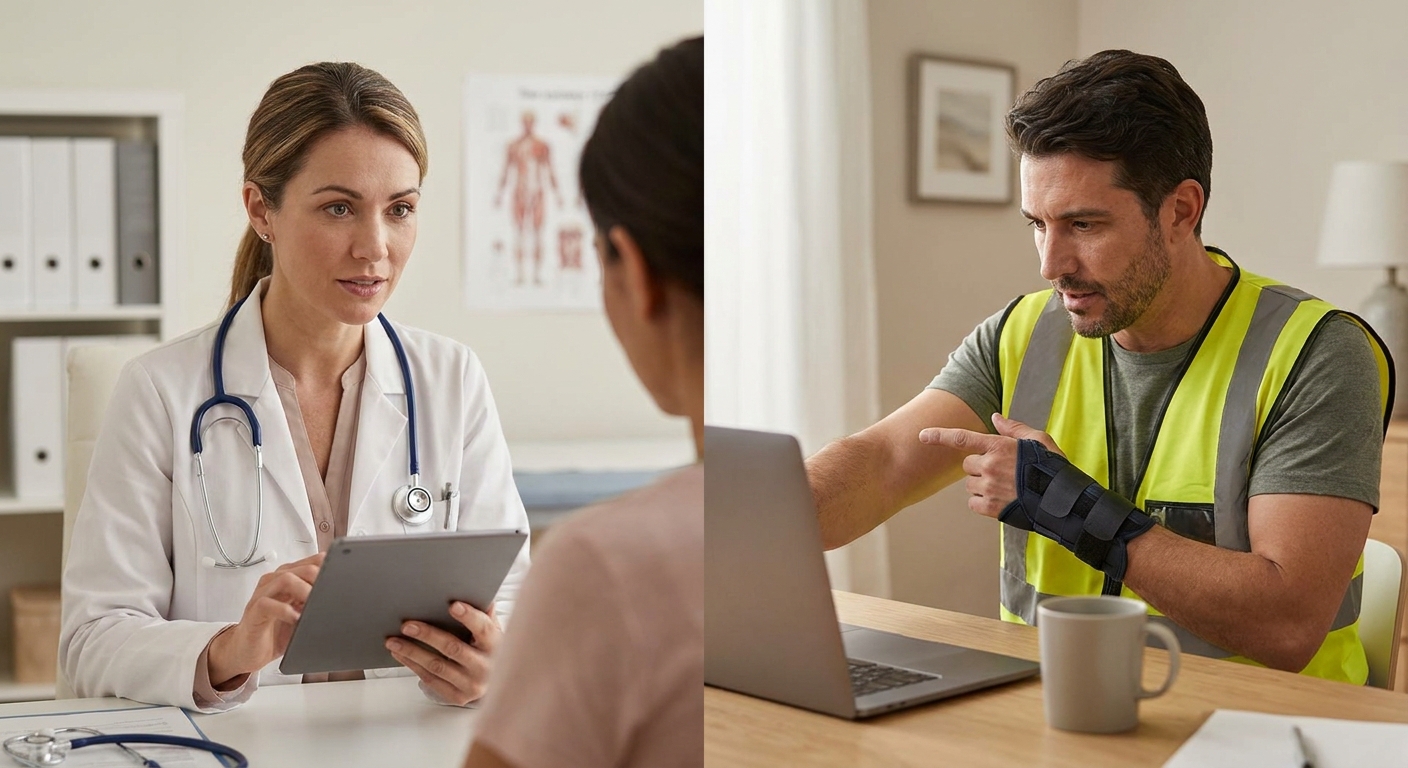
An injured worker who needs a workers' comp evaluation on video call is asking two different questions at once: is this legal for my state, and will the insurer actually accept it. This guide covers both, plus where podiatric telehealth fits when the injury is a foot, ankle, or lower-limb trauma.
- Telehealth workers comp evaluation works for follow-up care and work-status documentation in most states in 2026, not for the initial independent medical exam.
- An online doctor's note for work is the fastest legitimate telehealth output for a claim file — often issued same visit.
- Foot and ankle injuries from slips, falls, or standing-job strain benefit from podiatric telehealth follow-up like NowCare's, once the adjuster has the initial in-person report.
- Skip any platform promising a full workers' comp claim evaluation over video with no state-approved network behind it.
Why This Matters
Workers' comp claims live or die on documentation. A missed appointment, a vague note, or a provider outside the approved network can stall a claim for weeks. Telehealth solves the scheduling problem — same-day or next-day video visits instead of a two-week wait for an in-person orthopedic slot. It does not solve the legal problem: most state workers' comp systems still require the initial evaluation, and often the independent medical exam (IME), to happen with an in-person, state-approved provider.
What telehealth handles well in 2026 is everything after that first exam: follow-up visits, work-status updates, medication management, and documentation for light-duty or return-to-work notes. That's a real gap it fills, and it's worth using correctly instead of forcing it to do a job it can't legally do in your state.
Who This Is For
This guide is for an injured worker (or the HR person managing their claim) who has already reported the injury and is now managing the weeks of follow-up care, work-status notes, and check-ins that come after. It's not a substitute for the attorney or adjuster conversation about disputed claims — it's a practical guide to using telehealth correctly inside that process, with a specific focus on foot and ankle injuries, which make up a large share of slip, trip, and standing-job workers' comp claims.
What to Look For in Telehealth for Workers' Comp Injury Evaluation
State network status
Check whether the platform's clinicians are in your state's approved workers' comp provider network before you book anything. A visit with an out-of-network provider can get rejected by the claims adjuster even if the medical content is fine, which wastes the appointment and the week you waited for it.
Same-day or next-day scheduling
Workers' comp claims run on deadlines — many states require injury reporting and initial treatment documentation within 24 to 72 hours. A platform that can't get you seen inside that window doesn't help your claim, no matter how good the clinicians are.
Documentation adjusters actually accept
The visit note needs specific language: diagnosis, work restrictions, expected recovery timeline, and next follow-up date. Generic "seen and treated" notes get kicked back by claims adjusters and cost another round trip.
Specialty match to the injury
A general urgent-care telehealth visit is fine for a first triage call, but foot and ankle injuries — sprains, fractures, plantar fasciitis flares from standing 10-hour shifts — need a provider who actually treats those conditions, not a generalist rotating through unrelated complaints.
Follow-up continuity
One-off video visits create gaps in the claim record. Look for a platform that schedules the next check-in before you log off, so the recovery timeline in the file stays continuous instead of showing three-week silences that adjusters flag.
Honest scope disclosure
A platform that's upfront about what it can't do — full IME, disputed-claim testimony, in-person imaging — is more trustworthy than one that implies it can replace every in-person step. Treatment only if medically appropriate should show up somewhere in how the platform describes itself.
Top Picks: Where Telehealth Actually Helps a Workers' Comp Claim
The documentation move — online doctor's note for work. This is the single most useful telehealth output for a claim file: a work-status note issued the same visit, specifying restrictions or clearance. If your claim just needs the paper trail current, this is the fastest legitimate path. Buy.
The scheduling fix — same-day appointment platforms. When a follow-up is due inside a 24-to-72-hour reporting window and the local orthopedic office is booked two weeks out, a same-day telehealth slot keeps the claim timeline intact. Buy for time-sensitive follow-ups.
The recovery-continuity pick — post-surgery follow-up visits. Foot and ankle surgical claims — plate removals, tendon repairs — typically run six to eight weeks of follow-up checks. A platform built for that cadence keeps the file consistent instead of forcing a new intake every visit. Buy if your claim involves a surgical foot or ankle repair.
The prep step — how to prepare for your first telehealth appointment. Adjusters reject notes that lack specifics, and rushed first visits are where that happens. Fifteen minutes of prep — injury date, current restrictions, employer's light-duty policy — turns a generic visit into a usable one. Consider before your first call, not optional if the first visit already went badly.
The workforce-context pick — telehealth for remote workers. Repetitive-strain and standing-desk-related foot claims are common in remote and hybrid roles, and this framing matches an employer managing a distributed workforce through recovery. Consider if HR is coordinating care across multiple states.
Book podiatric telehealth follow-up
Provider-guided visits for foot and ankle recovery, on your schedule.
What to Avoid
- Platforms promising a full IME over video. Most state systems still require the independent medical exam in person; a telehealth-only "evaluation" that skips this step can get the whole claim disputed.
- Generalist urgent-care apps for a specialty injury. A rotating pool of unrelated-condition clinicians is fine for a sinus infection, not for a plantar fascia tear that needs a consistent provider tracking the same recovery.
- Any provider who won't confirm network status upfront. If you have to ask three times whether they're in your state's workers' comp network, assume they're not and move on before you burn an appointment slot.
"A visit with an out-of-network provider can get rejected by the adjuster even if the medical content is fine."
Verdict Comparison
| Criteria | Documentation note | Same-day scheduling | Surgical follow-up | Generalist urgent care |
|---|---|---|---|---|
| Speed | Same visit | Same/next day | Scheduled cadence | Same day |
| Adjuster acceptance | High, if specific | Moderate | High | Low for specialty injuries |
| Best for | Work-status update | Deadline pressure | Post-op foot/ankle | First triage call only |
| Verdict | Buy | Buy | Buy | Skip for injury follow-up |
FAQ
Is telehealth accepted for workers comp injury evaluation in 2026?
Yes, for follow-up visits and work-status documentation in most states as of 2026, but the initial independent medical exam typically still requires an in-person, state-approved provider.
Can a telehealth visit produce a valid doctor's note for work?
Yes — an online doctor's note for work issued during a telehealth visit is generally accepted for work-status documentation, provided the clinician is licensed in your state.
How fast do workers comp claims need the first medical visit reported?
Most states require injury reporting and initial treatment documentation within 24 to 72 hours of the incident, which is why same-day telehealth scheduling matters for staying inside that window.
Does telehealth work for foot and ankle workers comp injuries specifically?
Yes, for follow-up and recovery monitoring after a slip, fall, or standing-job strain injury — podiatric telehealth handles the ongoing check-ins well once the initial in-person exam is on file.
What happens if my telehealth provider isn't in my state's workers comp network?
The claims adjuster can reject the visit note even if the care itself was appropriate, which is why confirming network status before booking matters more than the visit quality.
How long does post-surgery telehealth follow-up typically run for a foot or ankle injury?
Surgical foot and ankle recoveries usually involve six to eight weeks of scheduled follow-up checks, and telehealth keeps that cadence consistent without repeat in-person intake each time.
Can telehealth replace the independent medical exam (IME) for a workers comp claim?
No — most states still require the IME to happen in person with an approved examiner, and telehealth platforms that imply otherwise should be treated as a red flag.
What documentation should a telehealth workers comp visit include?
A usable note includes the diagnosis, specific work restrictions, expected recovery timeline, and the date of the next follow-up — vague "seen and treated" notes get rejected by adjusters.
One Last Thing
The detail most workers miss: the follow-up note matters more than the first one. Adjusters build the recovery timeline off consistent check-ins, and a single missed or vague follow-up in 2026 can trigger a request for an in-person re-exam that costs more time than the telehealth visit ever saved. Book the next check-in before you hang up, every time.


