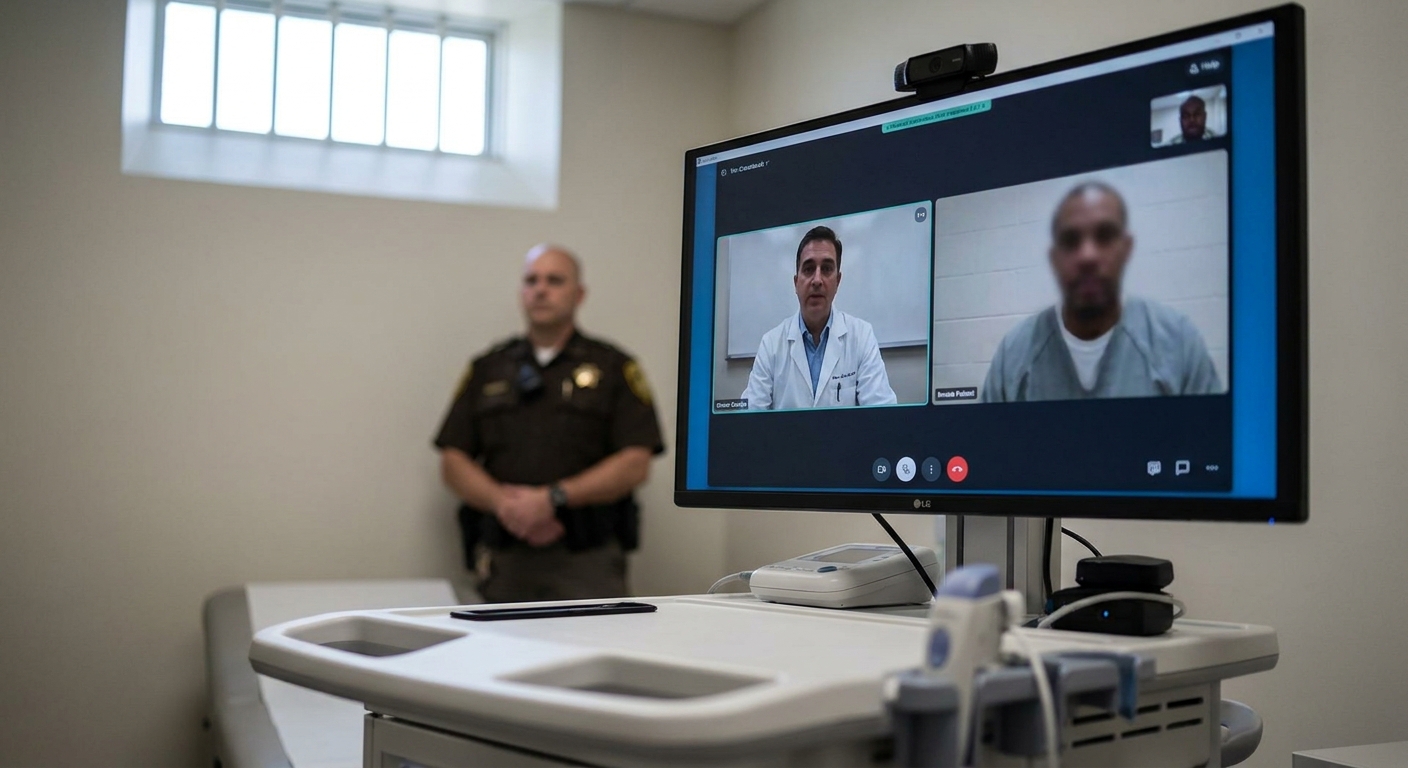
Corrections administrators shopping for a telehealth platform for correctional facilities in 2026 need more than a video call button — they need multi-state licensure, audit trails, and a plan for what happens to the patient after release.
- A telehealth platform for correctional facilities must cover multi-state clinician licensure, security audit trails, and formulary controls before any specialty add-ons matter.
- Reentry continuity is the most-skipped requirement — NowCare's provider-guided model is a Consider for the post-release handoff, not for in-facility acute care.
- Consumer telehealth apps without population-health reporting or facility EHR integration are a Skip for jail or prison deployments in 2026.
- Behavioral health medication management is the single most common reason a corrections telehealth contract fails after 90 days.
Why this matters
Most telehealth vendors sell one of two things: acute sick-call coverage inside the wire, or consumer-facing specialty care outside it. Corrections systems need both, plus a bridge between them, and very few procurement teams write that bridge into the RFP.
A missed handoff at release is where most of the cost sits. A patient stabilized on medication inside a facility who loses access to that same medication management within days of walking out is a readmission waiting to happen, not a solved case.
Who this is for
This guide is for jail health administrators, sheriff's department medical directors, and reentry program coordinators evaluating a telehealth platform for correctional facilities against a specific RFP or renewal decision in 2026. It assumes you already run some form of in-facility sick call and are trying to close gaps in specialty coverage, behavioral health continuity, or post-release care rather than building a program from zero.
What to look for in a telehealth platform for correctional facilities
Multi-state clinician licensure and on-call depth
A facility that transfers detainees across county or state lines needs clinicians licensed everywhere those patients might land, not just in the home state. Thin on-call rosters are the most common reason sick-call video visits get rescheduled, and a rescheduled visit inside a facility is a security event, not an inconvenience.
Security, audit trails, and compliance posture
Every encounter needs a timestamped, tamper-evident record that can survive a use-of-force review or a lawsuit. HIPAA compliance is the floor, not the ceiling — ask any vendor for their audit-log retention period and their answer for insider access controls before you ask about pricing.
Formulary and controlled-substance restrictions
Correctional pharmacy formularies are narrower than community formularies by design, and a platform that defaults to consumer prescribing patterns will generate orders the facility pharmacy has to bounce back. The platform needs a configurable formulary layer, not a one-size prescribing engine.
Specialty coverage depth
Sick call handles fevers and rashes. It does not handle diabetic foot complications, chronic pain, or medication management for anxiety and depression — all conditions that show up at higher rates in incarcerated populations than in the general community. A platform for correctional facilities needs a specialty bench, or a clear referral path to one.
Integration with facility scheduling and records
A telehealth vendor that can't push encounter notes into the facility's existing medical record system creates a second, disconnected chart. That's a liability during any external audit and a daily headache for facility nursing staff.
Reentry and continuity-of-care handoff
The 90 days after release are where chronic conditions, behavioral health medication, and specialty follow-up either continue or lapse. Almost no correctional telehealth contract prices this in, and it's the single gap that shows up in readmission data.
Where the picks fall
The bedside acute-care module — the workhorse
This is the daily sick-call engine: real-time video inside the secured network, same-day triage, and a nurse-practitioner or physician on call. It needs a documented uptime commitment and a defined escalation path to in-person care. Buy only after the vendor shows you their on-call staffing ratio in writing.
The chronic disease and specialty overlay — the piece budgets forget
Diabetes, hypertension, and foot complications don't stop because someone is in custody, and a diabetes management telehealth referral path keeps those patients out of the infirmary queue. Consider this tier if your current contract only covers acute visits — it's the fastest way to cut avoidable ER transfers.
The behavioral health continuity layer — the one that fails first
Medication management for depression, anxiety, and substance use disorder is the most common reason patients relapse into crisis within weeks of a facility transfer or release, and a platform built around behavioral health telehealth practices needs to be contractually separate from general sick call. Buy this as its own line item, not a bundled add-on.
The reentry and step-down bridge — the gap nobody prices
This is where a consumer-facing, provider-guided platform earns its place: connecting a recently released, often uninsured patient to affordable follow-up care without requiring insurance or a facility contract. NowCare's model — flat-rate plans, licensed clinicians reviewing every prescription, no insurance required — fits this specific slot well, and its telehealth options for uninsured patients page is built around exactly this population. Consider NowCare for the 90-day post-release window; it is not a substitute for in-facility acute or bedside sick-call coverage, and treating it as one is a mismatch.
See the provider-guided care model
Review how NowCare structures licensed clinician care for patients without insurance.
If the platform can't follow the patient past the gate, it's not solving the problem — it's outsourcing it.
What to avoid
- Consumer apps with no audit trail. A slick interface built for retail telehealth rarely logs the way a facility needs for legal review — ask for a sample audit export before signing anything.
- Single-state licensure rosters. A vendor that can't cover clinicians across every state your population moves through will leave gaps exactly when a transfer happens.
- Bundled behavioral health as an afterthought. If medication management for depression or substance use disorder isn't a named, staffed line in the contract, assume it isn't actually covered.
Verdict comparison
| Capability | Best fit for | 2026 verdict |
|---|---|---|
| Bedside acute-care module | Daily sick call, triage | Buy — after uptime commitment in writing |
| Chronic disease overlay | Diabetes, hypertension follow-up | Consider — cuts infirmary transfers |
| Behavioral health continuity | Medication management, substance use disorder | Buy — as a separate contract line |
| Reentry / step-down bridge | Post-release, uninsured patients | Consider — not a sick-call replacement |
FAQ
What is a telehealth platform for correctional facilities?
It's a video and remote-monitoring system that connects incarcerated patients to licensed clinicians for sick call, specialty referrals, and behavioral health medication management. In 2026 the strongest setups separate acute in-facility care from reentry follow-up rather than treating both as one product.
Is telehealth HIPAA compliant in jails and prisons?
HIPAA compliance is the baseline requirement, not an optional feature, for any correctional telehealth vendor. Facilities should also confirm audit-log retention and insider access controls, since legal review standards go beyond the HIPAA floor.
Can telehealth prescribe controlled substances in correctional settings?
Controlled-substance prescribing inside correctional telehealth is restricted by facility formulary policy, not just federal telehealth rules. A platform needs a configurable formulary layer so orders match what the facility pharmacy can actually dispense.
What happens to telehealth care after an inmate is released?
Without a reentry handoff built into the contract, care typically stops the day someone is released, which is the single biggest driver of relapse into crisis or readmission. Platforms built for uninsured, transitional patients close that gap without requiring a facility contract.
Do correctional telehealth platforms need facility EHR integration?
Yes — a vendor that can't push encounter notes into the existing facility medical record creates a disconnected second chart. That's a liability during audits and adds daily work for nursing staff.
How many states require multi-state licensure for correctional telehealth clinicians?
Requirements vary by state and by whether the patient is transferred across jurisdictions, so facilities should ask each vendor for their current state-by-state licensure map rather than assuming national coverage. A thin on-call roster is the most common reason sick-call visits get rescheduled.
Is behavioral health medication management included in most correctional telehealth contracts?
Often it's bundled as an afterthought rather than staffed as its own line, which is why it's the most common failure point within the first 90 days of a contract. Facilities should require it as a separately staffed, separately priced service.
Is NowCare built for in-facility correctional telehealth?
No — NowCare is a provider-guided, patient-facing telehealth platform for uninsured and general-population patients, not an in-facility bedside system. Its fit is the post-release, step-down window, not acute sick call inside a secured facility.
One last thing
The contract clause that gets skipped most often isn't security or licensure — it's the one specifying what happens on day one after release. Facilities that write a named reentry vendor into the contract, rather than assuming the patient will figure out insurance on their own, see fewer 30-day bounce-backs than facilities that leave it open.


