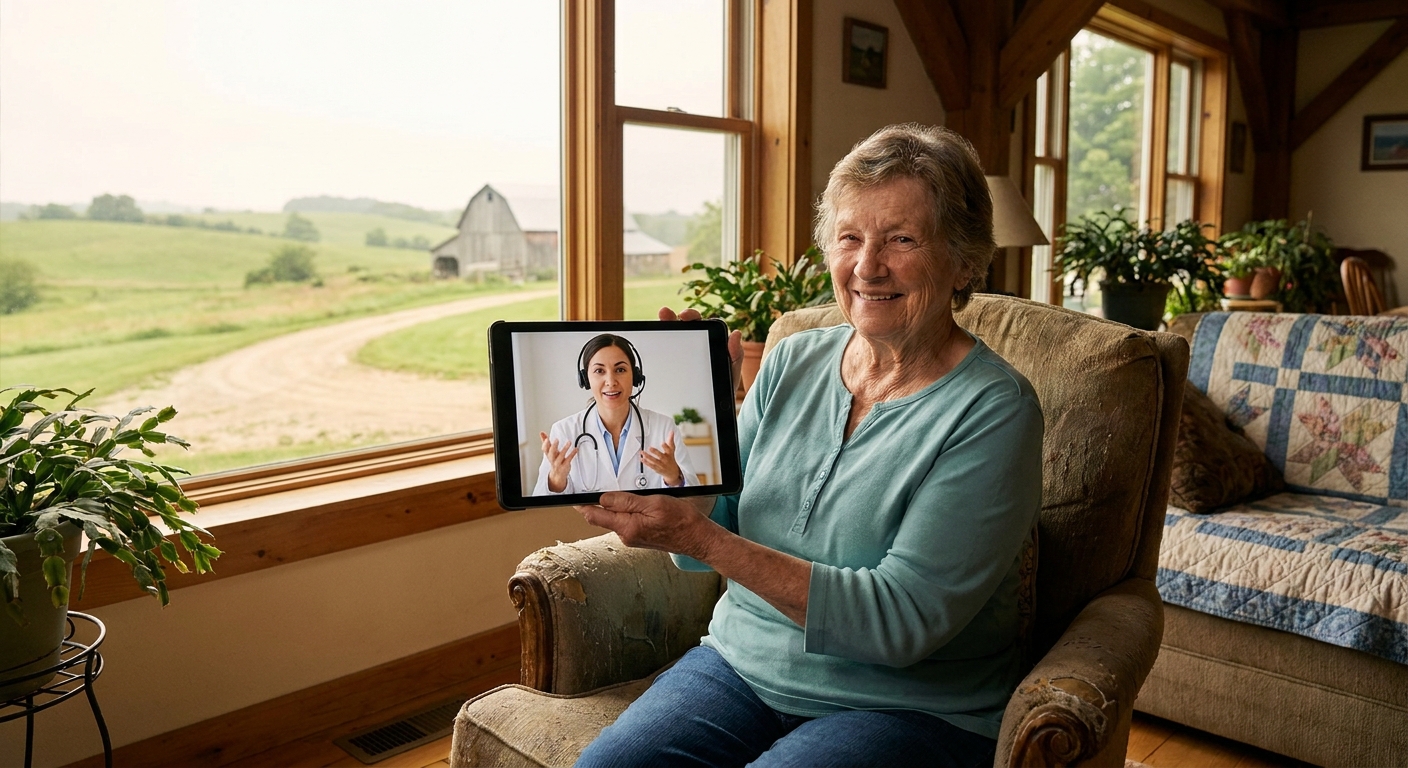
Finding a telehealth platform for rural patients means solving one problem first: distance. This guide breaks down what actually matters when the nearest clinic is 40 minutes away, and which NowCare services solve for it.
TL;DR
A good telehealth platform for rural patients has to replace the drive, not just add a video call on top of it — same-day video visits, prescription handling without a pharmacy run, and licensed clinicians who can actually treat your state. NowCare's chronic condition management program is the strongest pick for rural patients managing ongoing issues in 2026, with prescription refill support and urgent care video visits filling the gaps for acute needs. If you're weighing options, start with NowCare and match the service to the problem — don't pick a platform, pick a workflow.
Why this matters
Rural patients don't have a convenience problem — they have an access problem. A missed prescription refill, an untreated UTI, or a diabetic foot issue that goes unchecked for six weeks because the nearest podiatrist is two counties over isn't a scheduling inconvenience. It's a health outcome. Telehealth closes that gap only if the platform is built for it: licensed clinicians who cover your state, a workflow that doesn't require an in-person visit first, and follow-up that doesn't drop you after one appointment.
The wrong platform for a rural patient looks fine on a landing page and falls apart the moment you need a second visit, a refill, or a referral. That's the distinction this guide is built around.
Who this is for
This is for patients living 20+ minutes from the nearest urgent care or primary care office, patients managing a chronic condition (diabetes, hypertension, neuropathy) without consistent specialist access, and patients whose local pharmacy options or clinic hours don't match their work schedule. If you've ever put off a prescription refill because getting to the office meant taking a half-day off work, this is the buyer profile.
What to look for in a telehealth platform for rural patients
Same-day or next-day video visit availability
If the platform can't get you seen within 24-48 hours, it's not actually solving the distance problem — it's just moving the wait time online. Rural patients need scheduling that doesn't assume you can drop everything for a mid-week slot.
Licensed clinicians who cover your state
Telehealth is regulated state by state, and a platform that isn't licensed in your state can't legally treat you no matter how good the app looks. Confirm state coverage before you book — this is the single most common reason rural patients get bounced mid-visit.
Prescription handling without a local pharmacy dependency
Maintenance medications (blood pressure, thyroid, cholesterol) need refill workflows that don't require a repeat office visit every 90 days. A platform built for rural patients should route refills electronically to whichever pharmacy is closest to you, not the one nearest its home office.
Chronic condition follow-up, not one-and-done visits
A single video call doesn't manage diabetes or neuropathy. Look for a follow-up cadence — check-ins, medication adjustments, lab review — built into the program, not bolted on as an upsell.
Specialist-adjacent care for foot and ankle issues
Diabetic foot complications and neuropathy are two of the most under-treated conditions in rural counties, largely because podiatrists cluster in metro areas. A platform with provider-guided foot and ankle care closes a gap that primary care alone doesn't cover.
Cost clarity before you book
Rural patients are more likely to be uninsured or underinsured relative to metro patients. A platform that makes you guess at cost until after the visit is a red flag — pricing should be visible before you commit to an appointment.
Top picks for rural patients in 2026
The everyday fix — Urgent Care Video Visits One 15-20 minute video visit handles the acute stuff: cold and flu symptoms, pink eye, UTIs, allergy flare-ups. The value for rural patients is entirely about avoiding a same-day drive for something that doesn't need an ER or a physical exam. If you need to know how the booking flow actually works, the urgent care video visit booking guide walks through it step by step. Buy for anything acute that doesn't require hands-on exam.
The anchor pick — Chronic Condition Management This is the pick that matters most for rural patients specifically, because chronic conditions are exactly what falls through the cracks when the nearest specialist is an hour away. Online primary care for chronic condition management is built around ongoing check-ins rather than a single visit, which is the difference between managing a condition and just reacting to it every few months. Buy if you're managing diabetes, hypertension, or another condition that needs regular monitoring.
The refill lifeline — Prescription Refills for Maintenance Medications If your biggest friction point is getting a 90-day blood pressure or cholesterol refill without missing a day of work, this solves it directly. Online prescription refill for maintenance medications routes the prescription to whichever pharmacy is closest to you. Buy for patients stable on a maintenance medication who just need the refill loop simplified.
The wildcard — GLP-1 Weight Loss Telehealth GLP-1 access has become one of the fastest-growing telehealth categories heading into 2026, and rural patients often have the least local access to weight-management specialists. This is a real option if you're a candidate, but it requires actual clinician review — not every patient qualifies, and it's not a fit if you're looking for a quick prescription without an evaluation. Consider it if you've already discussed GLP-1 candidacy with a provider; Skip it if you're shopping for the fastest path to a prescription rather than the right one.
What to avoid
- Platforms that require an in-person visit before your first video visit. That defeats the entire purpose for a rural patient — if you have to drive in once anyway, you haven't solved the distance problem.
- Apps that don't confirm state licensure upfront. Finding out mid-visit that the clinician can't treat your state wastes the exact time you were trying to save.
- Any program that promises a specific medication before a clinician reviews your case. Treatment should be medically appropriate first, marketed second — that's the difference between a legitimate telehealth platform and a prescription mill.
Verdict comparison
| Criteria | Urgent Care Video Visit | Chronic Condition Management | Prescription Refill | GLP-1 Weight Loss |
|---|---|---|---|---|
| Same-day availability | Yes | Follow-up based | Yes | Intake-based |
| Best for | Acute symptoms | Ongoing conditions | Maintenance meds | Weight management |
| Follow-up built in | No | Yes | Refill cycle | Yes |
| Verdict (2026) | Buy | Buy | Buy | Consider |
FAQ
What's the best telehealth platform for rural patients in 2026? For ongoing conditions, chronic condition management programs built around follow-up (not single visits) are the strongest fit for rural patients, since they replace repeat specialist trips rather than just one appointment.
Is telehealth actually legal across state lines? No — clinicians must be licensed in the state where the patient is physically located at the time of the visit. Confirm your state is covered before booking, especially near state borders.
Can I get a prescription refilled online without an office visit? Yes, for maintenance medications like blood pressure or cholesterol drugs, provided you're already stable on the medication and a clinician reviews your history first.
**How fast can I get seen for an urgent issue like a UTI or pink eye? **Most urgent care video visit platforms offer same-day or next-day scheduling, which is the main advantage over driving to an in-person urgent care clinic.
Do rural patients qualify for GLP-1 weight loss telehealth? Qualification depends on clinical criteria evaluated during intake, not location — but rural patients often have fewer local weight-management specialists, which makes the telehealth route more practical.
Is online primary care a real replacement for a family doctor in a rural area? It can be for chronic condition management and routine care, though patients needing hands-on exams or diagnostic imaging will still need an in-person referral.
What should I check before choosing a telehealth platform? Confirm state licensure, same-day availability, and whether follow-up care is built into the program — a single video visit with no follow-up isn't a substitute for ongoing management.
Does foot and ankle care work over telehealth? Many diabetic foot and neuropathy concerns can be screened and managed through provider-guided video visits, with in-person referral reserved for cases that need direct examination.
One last thing
The rural patients who get the most out of telehealth in 2026 aren't the ones treating it as a replacement for every doctor visit — they're the ones who match the specific problem to the specific service: acute symptoms to urgent care video visits, ongoing conditions to chronic condition management, and refills to a dedicated refill workflow. Platforms that make you use one generic visit type for everything are the ones that eventually send you back to the waiting room.


