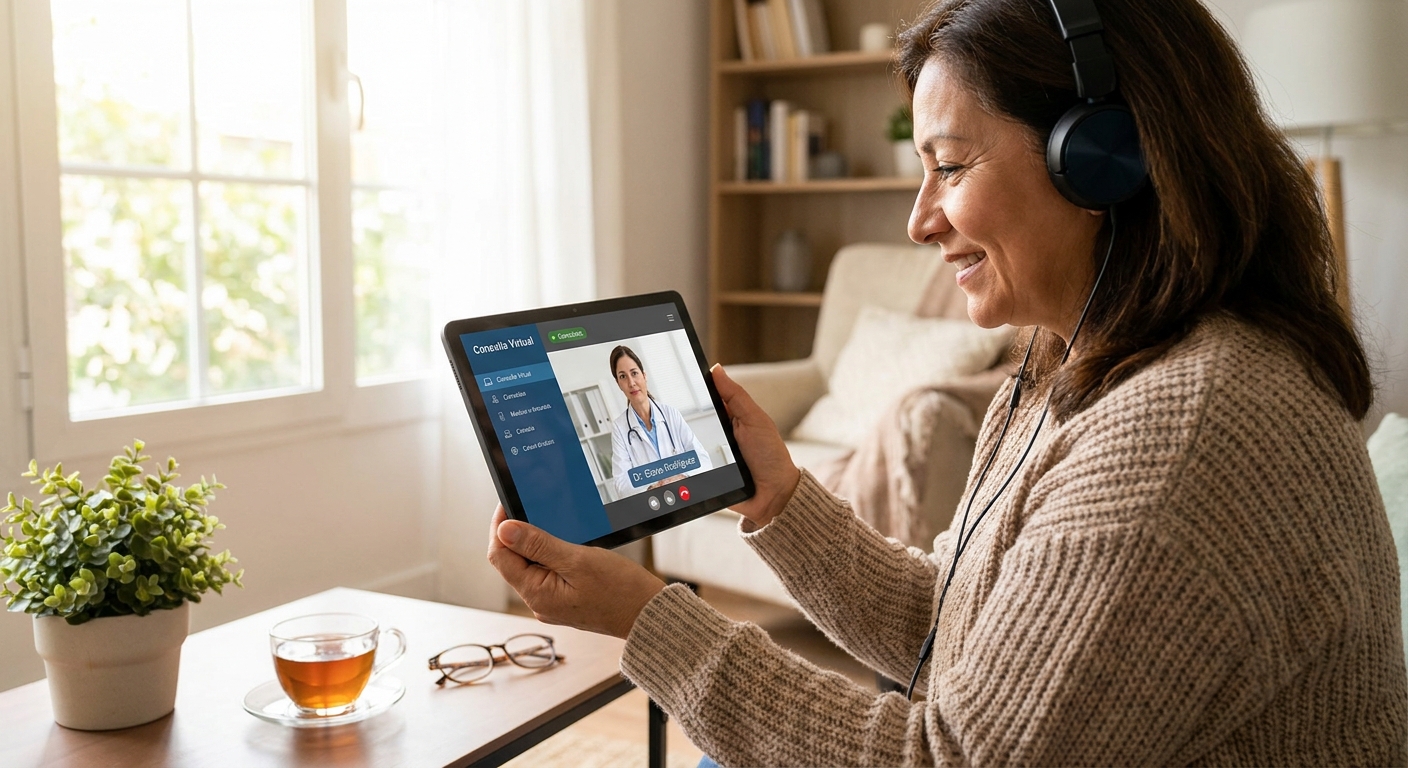
Spanish-speaking patients and the people booking care on their behalf need more than a marketing page promising "bilingual support" — they need proof a platform works in their language, without an insurance card, before a symptom gets worse.
- Confirm interpreter access before booking any telehealth platform for Spanish-speaking patients — policies vary by provider.
- No-insurance, flat-rate plans matter more than app store ratings for this audience: Buy the self-pay route when it's offered.
- Diabetic and foot-care pathways deserve extra weight given higher CDC-reported diabetes rates in Hispanic households: Buy.
- Family and multi-generation intake in one platform beats juggling three separate apps: Consider before switching everyone over.
- Same-day scheduling and pharmacy routing should be confirmed in writing, not assumed from a homepage badge, in 2026.
Why this matters
Roughly 19% of the U.S. population identified as Hispanic or Latino as of 2023 (U.S. Census Bureau), and a meaningful share of that group prefers to receive medical instructions in Spanish. Federal civil rights rules already require language access for programs that receive federal funding, but telehealth apps built for a general audience don't always carry that obligation — which means the burden falls on the patient to check before they pay.
That check matters more in 2026 than it did five years ago. Telehealth volume has grown past the pandemic-era spike, and so has the number of apps competing for the same search terms without the clinical infrastructure to back them up. A platform can look right in an ad and still fail a Spanish-speaking household on the one thing that matters: whether the visit actually gets understood.
Who this is for
This guide is for Spanish-speaking patients, and for adult children or spouses booking care for a parent or partner who is more comfortable in Spanish. It's built around real decision points: does the platform require insurance, can a prescription reach a nearby pharmacy, and does someone confirm interpreter access before the visit starts rather than during it. NowCare is one option worth checking against these criteria, alongside whatever platform your pharmacy or employer already recommends.
What to look for in a telehealth platform for Spanish-speaking patients
Interpreter access confirmed before you book
A chat widget that auto-translates English text is not the same as a licensed interpreter on a live video call. Ask directly, in writing, whether interpretation is available for the specific visit type — urgent care, foot and ankle, or weight management — before entering payment information.
No insurance requirement and transparent one-time pricing
Many Spanish-speaking households are uninsured or underinsured, and a per-minute or surprise-billing model punishes exactly the patients this guide is written for. Look for platforms quoting a flat rate for a defined plan length — 1, 3, or 6 months — before you check out, not after.
Licensed clinicians who review every case personally
Automated intake forms are fine for scheduling, but the prescription decision should sit with a licensed clinician, not an algorithm. Confirm that a real provider reviews the case and that treatment only proceeds when it's medically appropriate.
Fast scheduling for urgent needs
A sinus infection or a UTI doesn't wait for a callback three days out. Same-day or next-day video visits should be the default for urgent complaints, not an upsell.
Prescription routed to a pharmacy near the patient
Rx delivery to the patient's chosen pharmacy removes a second language barrier at the counter. Confirm the platform sends prescriptions electronically rather than requiring a printed script picked up in person.
Coverage across the whole household, not just one complaint
A household juggling a parent's diabetic foot care, a teenager's acne, and a grandmother's menopause symptoms benefits from one intake system instead of three separate logins. Fewer accounts means fewer chances for a language gap to slip through.
Top picks by situation
Pick 1 — The safe pick: no insurance card needed. This route fits households paying out of pocket and wanting a flat rate quoted upfront rather than a surprise bill. The relevant spec: plans run in defined 1, 3, or 6-month lengths with pricing set before checkout, which matters more for this audience than any single feature. Check the uninsured patients route and confirm interpreter access before booking. Verdict: Buy once language support is confirmed in writing.
Pick 2 — The wildcard: works from any zip code with a signal. Distance from a bilingual specialist stops mattering once the visit is fully virtual — the platform spans six clinical pillars from urgent care to foot and ankle health, all delivered the same way regardless of location. That breadth is the spec that matters for a rural patients household that would otherwise drive an hour for a Spanish-speaking provider. Verdict: Consider, and confirm interpreter access per visit type since rural access doesn't guarantee language access.
Pick 3 — The family plan: one intake for three generations. A household managing a grandparent's diabetic foot health, a parent's cholesterol refill, and a kid's ear infection benefits from consolidating everyone under one primary care relationship rather than three separate apps. Family primary care built for this exact situation matters because switching costs — new intake forms, new logins — compound fastest in multi-generation households. Verdict: Consider if the household already juggles more than two ongoing conditions.
Pick 4 — The specialist route: chronic condition management. CDC data has repeatedly shown higher diagnosed diabetes prevalence among Hispanic adults compared to non-Hispanic white adults, which makes diabetic foot health monitoring a higher-stakes category for this audience specifically. Ongoing nerve and circulation checks matter more here than a one-off urgent care visit. Verdict: Buy if diabetic foot symptoms — numbness, slow-healing cuts, nail changes — are already present.
Start a telehealth visit today
Book a provider-guided visit with one-time pricing and no insurance required.
What to avoid
- Machine-translated chat widgets marketed as "Spanish support." A translated FAQ page is not the same as a clinician who understands the visit in real time.
- Directories that list bilingual doctors without guaranteeing same-day access. A name on a list doesn't help if the next opening is three weeks out.
- General wellness apps that skip licensed clinician review. Weight loss and hormone programs in particular should have a physician reviewing the prescription, not a form auto-approving it.
Verdict comparison
| Pick | Best for | Plan length | Confirm before booking | Verdict |
|---|---|---|---|---|
| Uninsured / self-pay route | No insurance card | 1, 3, or 6 months | Interpreter access, flat pricing | Buy |
| Rural / remote access | No local bilingual specialist | Varies by pillar | Interpreter access per visit type | Consider |
| Family plan | Multi-generation household | 1, 3, or 6 months | Consolidated intake availability | Consider |
| Chronic condition (diabetes/foot) | Existing diabetic symptoms | 1, 3, 6 months or annual | Ongoing monitoring cadence | Buy |
FAQ
What is the best telehealth platform for Spanish-speaking patients in 2026?
The best fit depends on whether the household is uninsured, rural, managing a chronic condition, or juggling multiple generations of care — confirm interpreter access and flat pricing before booking with any provider in 2026.
Is interpreter access included with online doctor visits?
Not automatically. Ask the platform directly whether a licensed interpreter is available for your specific visit type before you pay, since policies differ by provider and by service line.
Do I need insurance to use a telehealth platform for Spanish-speaking patients?
No — many platforms, including flat-rate telehealth plans, are built for self-pay patients and don't require insurance. Look for one-time pricing quoted before checkout rather than per-minute billing.
How much does a Spanish-language telehealth visit cost in 2026?
Cost depends on the condition and plan length rather than the language spoken. Prioritize platforms that quote a flat rate for a defined plan — 1, 3, or 6 months — instead of variable per-visit billing.
Can a telehealth platform send a Spanish-language prescription to my local pharmacy?
Most licensed telehealth providers send prescriptions electronically to the pharmacy of your choice regardless of the language spoken during the visit. Confirm this at intake rather than assuming it.
What telehealth services matter most for chronic conditions like diabetes?
Diabetic foot health monitoring — checking for numbness, slow-healing cuts, and nail changes — matters most given higher diagnosed diabetes rates among Hispanic adults reported by the CDC. Ongoing nerve and circulation checks catch problems before they become emergencies.
How fast can a Spanish-speaking patient get a same-day telehealth appointment?
Same-day or next-day video visits should be the default for urgent complaints like sinus infections or UTIs in 2026. If a platform can't offer that, it's not built for urgent needs regardless of language support.
Are telehealth platforms HIPAA compliant for Spanish-speaking patients?
HIPAA compliance applies regardless of the patient's spoken language — it governs how health data is stored and shared, not the language of the visit. Confirm HIPAA compliance and secure intake as a baseline, then check language access separately.
One last thing
The fastest way to tell whether a platform actually supports Spanish speakers isn't the marketing page — it's the intake form. If the intake form itself renders in Spanish before you've entered a credit card, that's a stronger signal than any badge on the homepage. If it doesn't, call and ask directly before you book, because a translated landing page with an English-only intake form usually means the interpreter shows up late, if at all, and 2026 households don't have time to find that out mid-visit.


