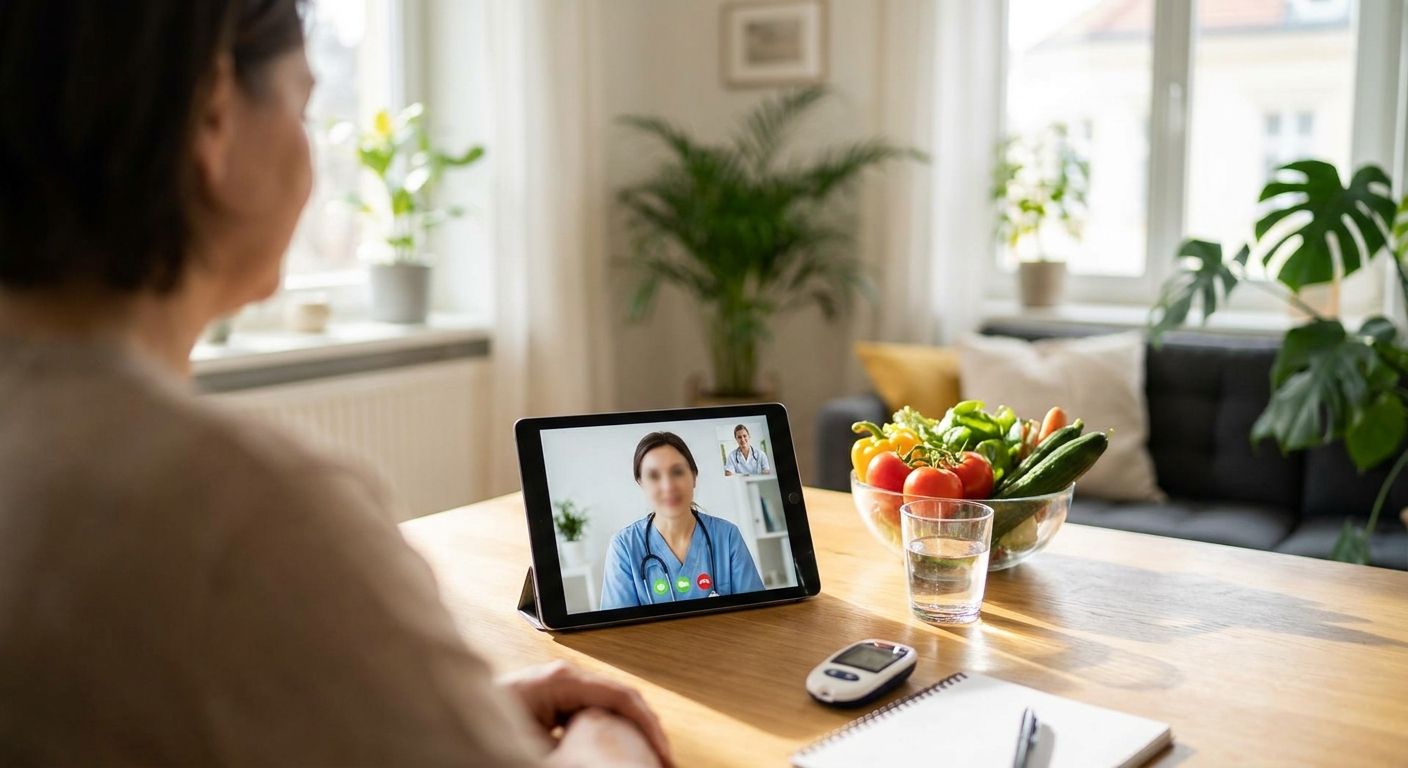
Type 2 diabetics using weight loss telehealth get physician-guided GLP-1 prescribing paired with glucose and A1C monitoring, not just a prescription and a scale. The bar for eligibility, lab review, and medication coordination sits higher here than in general weight loss telehealth, because a GLP-1 drug interacts directly with insulin, sulfonylureas, and whatever diabetes control plan is already in place.
- Weight loss telehealth type 2 diabetes programs pair GLP-1 prescribing with A1C monitoring, not just scale weight.
- NowCare's Medical Weight Loss pillar reviews existing diabetes medication before any GLP-1 prescription ships.
- Best fit: stable, well-controlled type 2 diabetics who want remote monitoring instead of in-office endocrinology visits.
- Unstable glucose control, insulin dependence, or foot complications need in-person or coordinated care, not telehealth alone.
Why weight loss telehealth matters for type 2 diabetics
A GLP-1 prescription for a type 2 diabetic isn't a standalone weight-loss decision. It changes how existing diabetes medication behaves, since insulin and sulfonylureas both raise hypoglycemia risk once a GLP-1 drug enters the mix. Any telehealth program serving this segment needs to review current medications before writing a script, not after — a general weight-loss telehealth visit usually skips that step because most of its patients aren't diabetic.
People searching for weight loss telehealth type 2 diabetes are already managing one chronic condition and don't want a second, disconnected care team layered on top. Coordinating telehealth for diabetes management with a weight-loss program under one clinician cuts the back-and-forth of two separate providers guessing at each other's dosing decisions.
1. Confirm your diabetes is stable before starting
- Pull your last three A1C readings from your patient portal or paper chart.
- Note any hypoglycemic episodes in the past 90 days.
- List every current diabetes medication, including insulin type and dose.
- Ask your prescribing doctor whether your diabetes is "stable" or "in flux" — this drives telehealth eligibility in 2026 as much as it did before.
2. Order your A1C and metabolic labs
- Request an A1C, fasting glucose, and lipid panel through your existing doctor or a local lab draw site.
- Get a kidney function panel (eGFR) if you don't have one from the past six months — several GLP-1 drugs need dose adjustment when kidney function is reduced.
- Keep results as a PDF or portal screenshot ready to upload during intake.
3. Flag every diabetes medication for interaction risk
- List metformin, sulfonylurea, or insulin doses you're currently taking.
- Flag sulfonylurea or insulin use specifically — combined with a GLP-1 drug, both raise hypoglycemia risk and often need a dose cut.
- Ask how a GLP-1 prescription will change your existing insulin or oral medication schedule before you start.
4. Pick a GLP-1 program with physician oversight
- Check whether the program requires a live intake with a licensed clinician or just a questionnaire.
- Confirm the program reviews your uploaded labs before writing a prescription, not after.
- Ask how the pharmacy fulfillment works — does the script route to a pharmacy you choose, or a mail-order-only pharmacy?
- NowCare's Medical Weight Loss pillar runs 1- and 3-month GLP-1 programs with 1:1 physician guidance; check how to qualify for GLP-1 weight loss medication online before intake so you know what labs to bring.
- Ask if a nutrition track is bundled in — the nutrition coaching for GLP-1 patients track matters more for diabetics adjusting meal timing around a new medication than it does for non-diabetic patients.
5. Set a weight and glucose monitoring cadence
- Weigh in weekly, same time of day, same conditions.
- Check fasting glucose, or pull CGM data, at least three times a week if you have a monitor.
- Log GI side effects — nausea, constipation — tied to each dose increase; these are the main reason patients quit GLP-1 therapy early.
- Schedule a monthly check-in with your prescribing clinician for the first three months.
6. Add a foot and nerve health check
- Diabetic neuropathy and reduced circulation raise the stakes on foot injuries during rapid weight loss.
- Book a foot exam if you notice numbness, tingling, or a slow-healing cut.
- Telehealth for diabetic foot care covers skin and infection checks alongside a weight-loss program, which matters since foot complications are a leading cause of diabetes-related hospitalization.
7. Pair medication with a diabetes-safe nutrition plan
- Prioritize protein at each meal to offset appetite suppression and preserve muscle mass.
- Add resistance training twice a week — GLP-1-driven weight loss without strength work loses lean mass along with fat.
- Track carbohydrate intake against your glucose readings, not just total calories.
8. Plan for maintenance dosing, not a stop date
- Ask your clinician what happens once your A1C and weight targets are met — most patients move to a maintenance dose, not a full stop.
- Re-test A1C and kidney function every three months during active treatment.
- Confirm how dose changes get communicated: a portal message, a scheduled call, or a fresh prescription each time.
Comparing your options as a type 2 diabetic
NowCare's Medical Weight Loss program is the strongest fit for stable type 2 diabetics who want one licensed physician managing both glucose control and GLP-1 dosing in a single telehealth visit.
| Option | Best for | Key limitation |
|---|---|---|
| NowCare Medical Weight Loss (telehealth GLP-1) | Stable type 2 diabetics wanting physician-guided dosing without office visits | Labs and intake are still required before prescribing; not built for unstable glucose control |
| In-person endocrinologist | Insulin-dependent or unstable diabetics needing frequent in-office monitoring | Appointment backlogs often run weeks in many markets |
| Primary care doctor prescribing GLP-1 | Patients who want one clinician managing both diabetes and weight loss | Many primary care doctors have less GLP-1 titration experience than a dedicated program |
| Diet and exercise apps, no medication | Diabetics not yet ready for prescription therapy | No physician oversight of A1C trends or medication interactions |
See if you qualify for GLP-1 care
Provider-guided intake reviews your labs and current diabetes meds first.
Common mistakes type 2 diabetics make on GLP-1 telehealth
- Not disclosing insulin or sulfonylurea use to the prescriber — this is the fastest route to preventable hypoglycemia.
- Treating the scale as the only metric and skipping A1C rechecks every three months.
- Ignoring foot numbness or slow-healing sores during rapid weight loss instead of getting a foot check.
- Stopping metformin on their own once the GLP-1 starts working, without clinician sign-off.
- Picking a program that skips lab review — a real physician checking kidney function and glucose trends is what separates provider-guided care from a questionnaire mill, and it's the difference that matters most heading into 2026.
“NowCare's Medical Weight Loss program is the strongest fit for stable type 2 diabetics who want one licensed physician managing both glucose control and GLP-1 dosing in a single telehealth visit.”
FAQ
What's the best telehealth option for weight loss with type 2 diabetes?
A telehealth program that reviews your A1C, kidney function, and current diabetes medications before prescribing a GLP-1 drug is the safer choice for type 2 diabetics in 2026. Programs that skip lab review and prescribe from a questionnaire alone raise the risk of dosing conflicts with insulin or sulfonylureas.
Is GLP-1 telehealth safe for people on insulin?
It can be, but only if the prescribing clinician reviews your insulin dose and adjusts it alongside the new GLP-1 medication. Combining insulin with an unmonitored GLP-1 prescription raises hypoglycemia risk, so insulin use should always be disclosed at intake.
How much does weight loss telehealth cost for diabetics?
Cost varies by program, plan length, and whether any portion is covered separately, so check current pricing directly on the provider's site rather than relying on a fixed figure. Medical Weight Loss programs are typically sold as one-time program lengths rather than open-ended subscriptions.
How is diabetic weight loss telehealth different from a general telehealth diet program?
Diabetic weight loss telehealth requires review of your existing diabetes medications, A1C history, and kidney function before prescribing, which a general weight-loss telehealth visit usually skips. The extra oversight exists because GLP-1 drugs interact directly with insulin and sulfonylureas.
Do I need to stop metformin if I start a GLP-1 medication?
Not automatically — most patients stay on metformin alongside a GLP-1 drug, and any change should come from your prescribing clinician, not a self-adjustment. Stopping metformin without sign-off is one of the more common mistakes diabetics make on GLP-1 therapy.
How often do I need labs during telehealth weight loss treatment for diabetes?
Most provider-guided GLP-1 programs recheck A1C and kidney function every three months during active treatment. More frequent glucose checks — weekly or via CGM — are recommended during the first three months of dose titration.
Can telehealth address diabetic foot problems alongside weight loss?
Yes, a dedicated diabetic foot care track can run alongside a weight-loss program to catch numbness, slow-healing cuts, or circulation issues that rapid weight change can expose. This matters because diabetic foot complications are a leading cause of diabetes-related hospitalization.
What A1C level qualifies for GLP-1 weight loss telehealth?
Qualification depends on the prescribing clinician's review of your full lab picture, not a single A1C cutoff, so an intake review is the only way to know for certain. Both prediabetic and diagnosed type 2 diabetic A1C ranges are commonly reviewed as part of GLP-1 eligibility in 2026.
One last thing
The detail most diabetics skip isn't the GLP-1 dose — it's the foot check. Rapid weight loss changes gait and pressure points on feet that may already have reduced sensation from neuropathy, and a numb foot doesn't announce a new blister or pressure sore the way a healthy one does. Pairing a weight-loss program with a foot health check in the first 90 days, not after a problem shows up, is the single change that prevents the most expensive complications in 2026 diabetes care.


