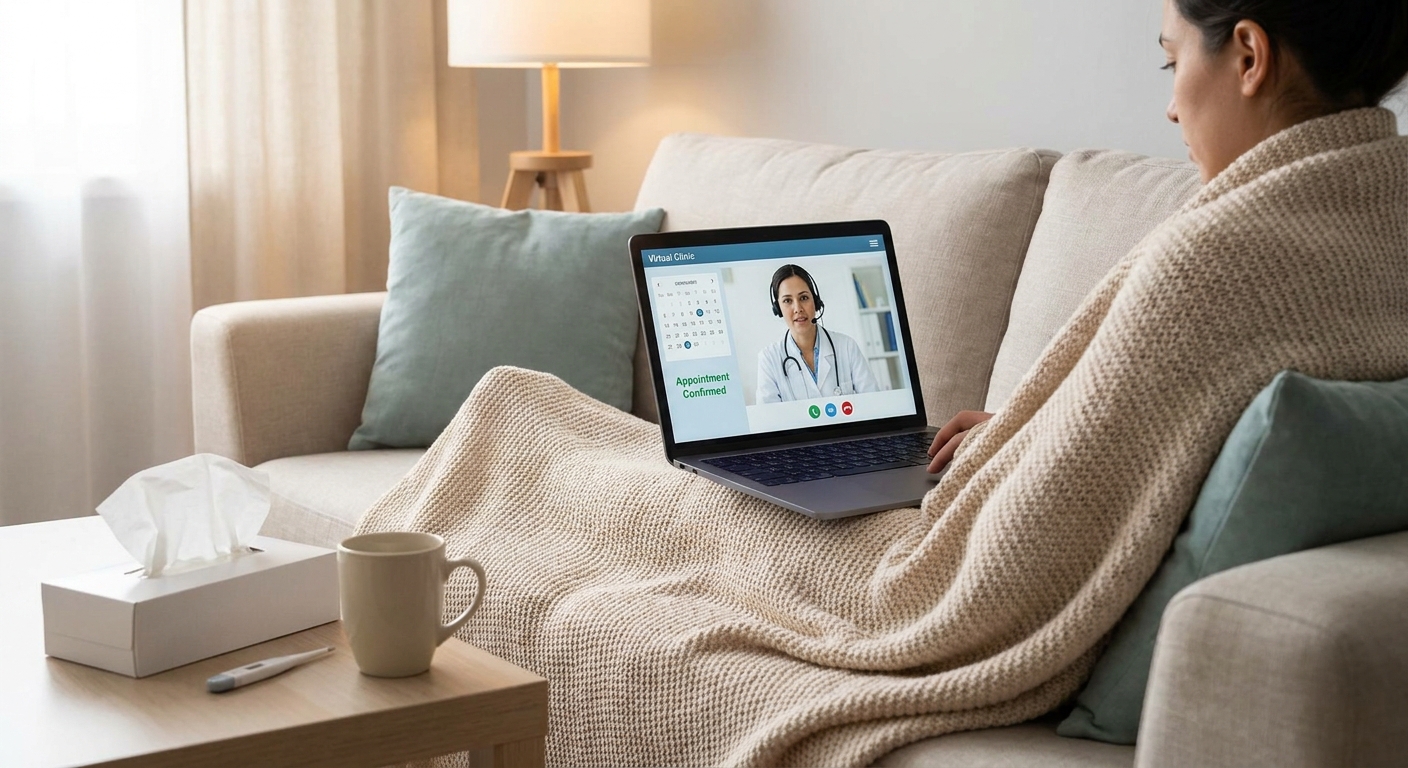
Cold and flu symptoms rarely wait for a doctor's office to open, and in 2026 most people start their search for care with a phone, not a car. This guide breaks down what actually matters when you book an urgent care online appointment for cold and flu symptoms, and where a same-day virtual visit beats — or loses to — the alternatives.
TL;DR: For a single flare-up of cold or flu symptoms, an on-demand urgent care telehealth visit is the fastest fix — most connect you to a provider in under 15 minutes. If symptoms keep coming back or you're managing a chronic condition alongside them, an online primary care relationship through a platform like NowCare is the stronger long-term move: Buy for recurring illness, Consider on-demand apps for one-off symptoms, Skip the ER unless you hit red-flag signs like a fever above 103°F.
Why This Matters
Most cold and flu cases resolve in 3 to 7 days without a prescription, but knowing when a virtual visit is enough — versus when you need labs, an in-person exam, or an ER — is where people waste time and money in 2026. Telehealth for respiratory illness has gotten fast and cheap, but not every option is built the same way, and the wrong pick can mean a missed strep test or an unnecessary ER copay.
The difference between a rushed chat-bot triage and a licensed provider actually looking at your symptoms is the whole ballgame here. That's the lens for every pick below.
Who Needs an Urgent Care Online Appointment for Cold and Flu Symptoms
This guide is for adults with active cold or flu symptoms — sore throat, congestion, cough, low-grade fever, body aches — who want a same-day answer without a waiting room. It's also for parents managing a sick household, young adults without employer insurance who need an affordable first stop, and anyone managing a chronic condition (asthma, diabetes, COPD) where a routine cold can turn into something bigger fast.
What to Look For in an Urgent Care Online Appointment for Cold and Flu
Same-Day Availability
Cold and flu symptoms peak and fade over 10 to 14 days, so a visit booked three days out defeats the purpose. Look for platforms that show real-time provider availability, not just a booking request that gets confirmed later. Same-day access is the single biggest differentiator between a true urgent care telehealth option and a generic scheduling app.
Licensed Provider Access
A symptom checker isn't a diagnosis. You want a licensed physician, nurse practitioner, or physician assistant reviewing your case, not an algorithm sorting you into a bucket. This matters more for flu, where a rapid test referral or antiviral prescription window (typically within 48 hours of symptom onset) can change the course of the illness.
Prescription and Testing Guidance
Most cold and flu visits don't need medication, but when they do — antivirals, symptom relief, or a referral for a strep or flu test — the provider should explain why, not just prescribe on request. Treatment only if medically appropriate is the standard to hold every option to, not a nice-to-have.
Cost and Insurance Transparency
Pricing should be visible before you book, not after the visit ends. Some platforms bill insurance directly, others run flat self-pay rates — either is fine, but not knowing the number until the invoice arrives is a red flag in 2026's telehealth market.
Follow-Up Support
Flu symptoms lasting past 10 days, or a cold that turns into a secondary infection, needs a follow-up path — not a brand-new appointment with a stranger. Secure messaging with the same care team beats starting over every time symptoms shift.
Escalation Path
The best options are upfront about their limits: chest pain, trouble breathing, or a fever above 103°F means in-person or emergency care, not another virtual visit. A platform that never tells you to go elsewhere isn't being cautious — it's avoiding the conversation.
Top Picks for Cold and Flu Telehealth Visits
Online primary care visit — the steady pick. Best for recurring illness or when a chronic condition is in the mix. Online primary care for families through a physician-led platform like NowCare pairs the same-day visit with an actual ongoing relationship, so a cold that lingers past a week gets a real follow-up instead of a new intake form. Buy if you get sick more than once or twice a season or manage another condition alongside it.
On-demand urgent care app — the fastest option. Median connect time under 15 minutes in 2026, no standing appointment needed. Good for a single, isolated flare-up when you just need a prescription check or reassurance. Consider for one-off symptoms, but expect to repeat your history with a new provider each time.
In-person urgent care clinic — the safe backup. Necessary when a physical exam matters — chest auscultation, ear check, or a rapid strep swab that can't be done remotely. Walk-in wait times commonly run 30 to 60 minutes depending on the clinic and season. Consider when symptoms include something a screen can't evaluate.
Retail pharmacy clinic — the walk-in wildcard. Convenient for a quick look and an over-the-counter recommendation, but staffing and hours vary store to store, and prescription authority is often limited to a nurse practitioner. Consider only as a last-resort fallback, not a first choice.
Emergency room — the last resort. Built for chest pain, difficulty breathing, or a fever that won't break above 103°F, not routine cold and flu symptoms. Average ER wait times for non-emergent visits regularly run past two hours. Skip for typical cold or flu unless you're hitting a red-flag symptom.
What to Avoid
- Chat-only symptom checkers with no live provider. If a bot sorts your symptoms into a category and never connects you to a licensed clinician, it's a search engine, not a visit.
- Apps that require a self-diagnosis before booking. If the intake form assumes you already know it's the flu versus strep versus a sinus infection, you're doing the provider's job for them.
- Flat-fee overnight urgent care add-ons. Some apps charge a premium for after-hours access on top of the visit fee — check the total before you confirm, not after.
Verdict Comparison Table
| Option | Same-Day Access | Licensed Provider | Follow-Up Support | Best For | Verdict |
|---|---|---|---|---|---|
| Online primary care (NowCare) | Yes | Yes | Strong | Recurring illness, chronic conditions | Buy |
| On-demand urgent care app | Yes, under 15 min | Varies | Limited | One-off symptoms | Consider |
| In-person urgent care clinic | Same day, wait 30-60 min | Yes | Limited | Physical exam needed | Consider |
| Retail pharmacy clinic | Varies by store | Limited | None | Quick OTC guidance | Consider |
| Emergency room | Immediate, 2+ hr wait | Yes | None | Severe/red-flag symptoms | Skip |
FAQ
What's the best urgent care online appointment for cold and flu symptoms? For a single flare-up, an on-demand telehealth app connecting you to a provider in under 15 minutes covers most cases. For recurring illness or a chronic condition alongside it, online primary care with an ongoing care team is the stronger 2026 pick.
Is online urgent care better than an in-person visit for the flu? For most uncomplicated flu cases, yes — a virtual visit gets you seen faster and can guide antiviral treatment within the 48-hour window that matters most. In-person care is better when a physical exam or in-office test is needed.
How much does an urgent care online appointment cost? Pricing varies by platform and whether insurance is billed directly or you pay self-pay rates; check the specific platform's current pricing before booking rather than assuming a flat number.
Can a virtual visit prescribe antibiotics or antivirals for the flu? Yes, when medically appropriate — a licensed provider can prescribe antivirals or refer you for testing, but treatment is based on your symptoms and history, not a standing request.
When should I skip telehealth and go to the ER instead? Chest pain, trouble breathing, confusion, or a fever above 103°F are signs to go in person immediately rather than book a virtual visit.
How long do cold and flu symptoms typically last? Most colds resolve in 7 to 10 days and flu in 3 to 7 days; symptoms lasting longer than 10 days warrant a follow-up visit rather than waiting it out.
Do I need insurance to book an online urgent care visit? No — many platforms, including options built for primary care for young adults without insurance, offer self-pay visit rates without requiring coverage.
Is a same-day virtual visit as accurate as an in-person exam? For most respiratory symptoms, yes, since diagnosis relies heavily on reported symptoms and history; conditions needing a physical exam or lab test still call for in-person care.
One Last Thing
The detail most people miss in 2026: the antiviral treatment window for flu is roughly 48 hours from symptom onset, which means the telehealth option with the fastest same-day access — not the cheapest one — is usually the right call the first time you feel sick, not three days in.


